
Exterior House Painting, quoted in gallons you can count
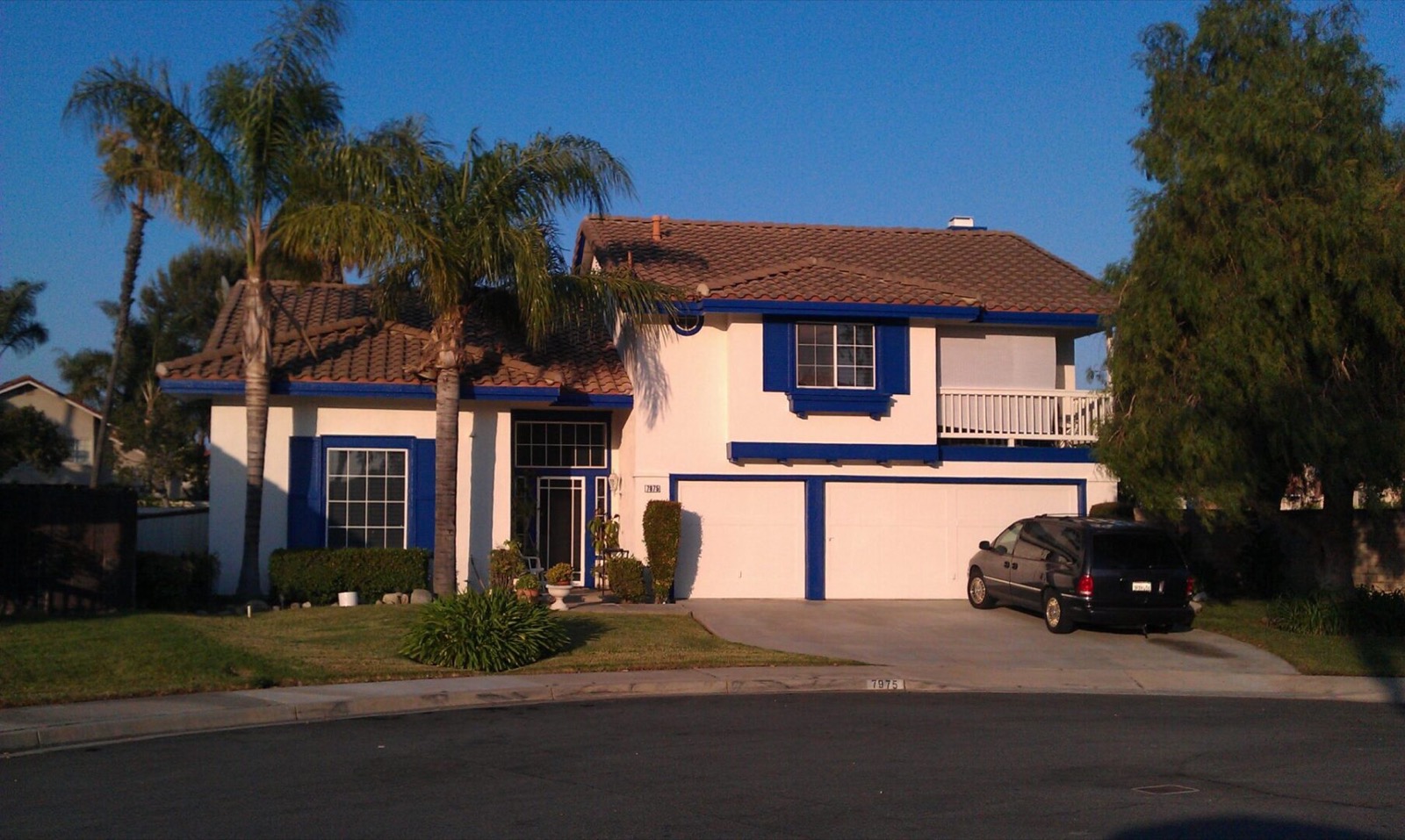
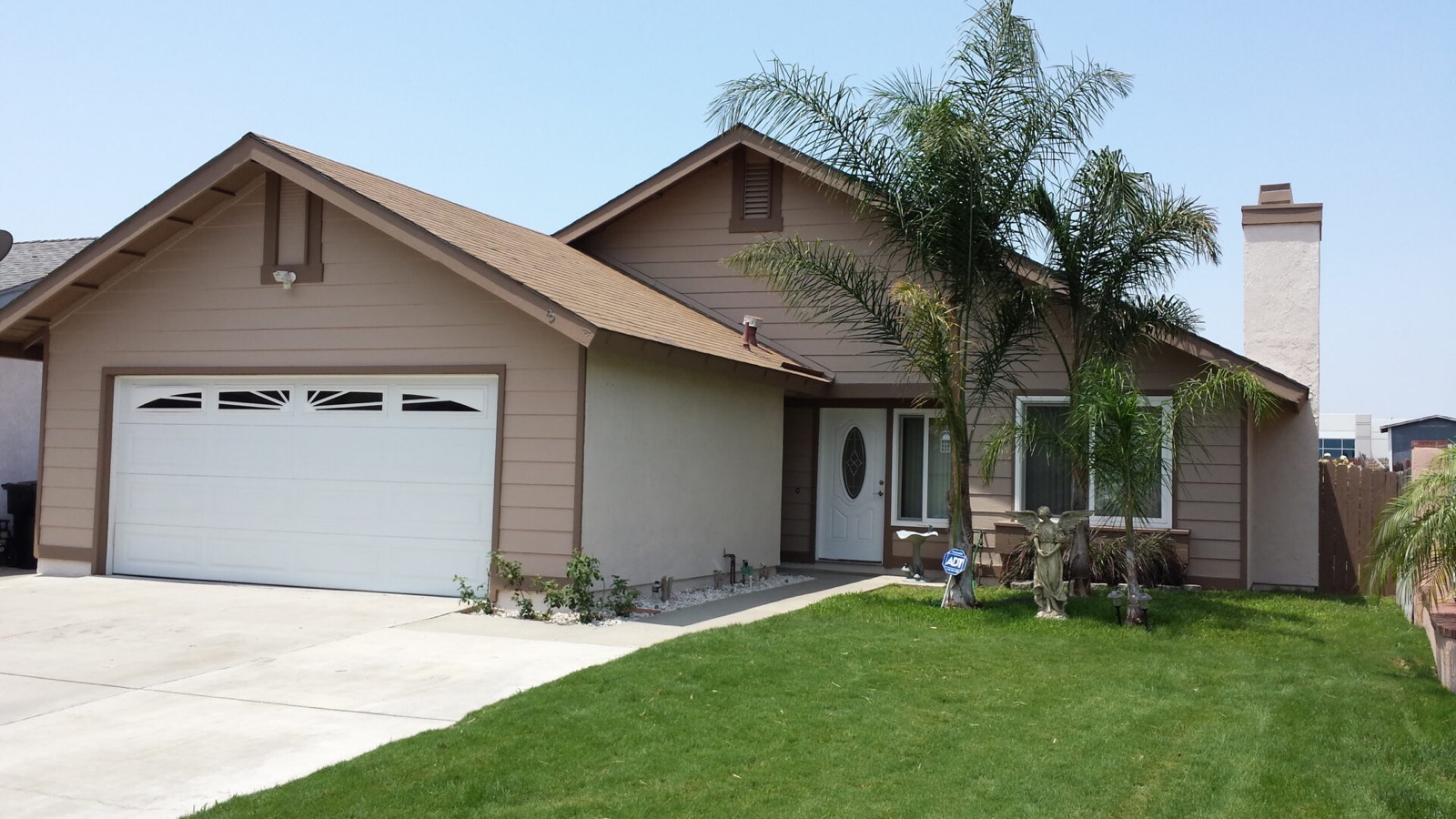
The whole envelope: body, trim, fascia, doors. Quoted from measured square footage and the printed spread rate, then washed, repaired, primed, and given two full coats. Out of Jurupa Valley, across Riverside and San Bernardino Counties, quoted from measured footage and the spread rate on the can. See the finished work or ask for a ballpark.
☎ (951) 685-1595What this work really involves
Exterior paint in the Inland Empire is armor against a sun that forgives nothing. The difference between a job that lasts four years and one that lasts ten is not the brand on the can. It is prep, primer, and whether both finish coats actually went on at full strength.
Curb appeal is the visible half; the invisible half is envelope protection. Paint is the sacrificial layer that keeps water and UV off your stucco and wood, and replacing that layer on schedule is the cheapest structural maintenance a building gets.
Who calls for this: owners whose houses were painted eight-plus years ago and can feel it, buyers who just closed on a faded gem, HOAs holding a standard, and sellers who know exterior paint returns more at listing than almost any spend. If the sun has been winning, this is how the house wins back.
Exterior House Painting sits in our Exterior work, and it carries the same rule as everything on our truck: the job gets every gallon it was quoted. That is not a slogan, it is arithmetic you can audit. The spread rate is printed on every can we buy, your surfaces have a measurable square footage, and the two numbers together say exactly what an honest job consumes. We put that math on the quote, and the empty cans are stacked where you can count them.

How the job runs, start to finish
Wash the envelope
The house gets washed at the right pressure per surface. Paint over dust is a warranty nobody can honor. Wash day doubles as inspection day, and findings go in your quote notes.
Repair and rebuild
Stucco cracks, wood rot, failed caulk: cut out, filled, and rebuilt with materials that move with the house. Repairs cure before primer, primer cures before finish. Calendar pressure never reorders chemistry.
Prime what needs it
Bare wood, patched stucco, chalky faces, and raw metal get their specific primers. Primer is where adhesion is decided. Primer choice is substrate law: what binds chalk will not seal tannin, and the truck carries both.
Two full finish coats
Sprayed and back-rolled or brushed by surface, at the printed spread rate. The sun-side faces get no discount. Back-rolling after spray pushes film into texture instead of tenting over it.
Detail and walkthrough
Lines cut at the roofline and windows, overspray checked, yard cleaned nightly, and a final walk with the gallon math available. Nightly cleanup is non-negotiable: tools staged, ladders down, yard walkable.

Products and specs, named out loud
Exterior products out here earn their keep in ultraviolet. We run 100 percent acrylic systems with real fade resistance, elastomeric where stucco movement demands it, and oil-modified primers where tannin bleed or chalk calls for them. Every product is rated for the surface it goes on and the sun it faces, and the datasheet coverage is the number on your quote.
Color depth changes product behavior outside. Deep bases fade faster and show film thickness sins sooner, so dark exteriors get an extra conversation about product line and warranty reality before we tint a single gallon. That is the kind of detail a fifty-year painter checks by reflex.
Built for this valley
This work behaves differently in the Inland Empire than it does in the coastal cities the product brochures are shot in. Summer surface temperatures over 140 degrees on west walls, winter nights near freezing in the passes, sprinkler hard water on every fence line, and dust that never fully quits. Our specs are written for this valley: products chosen for real UV numbers, schedules built around surface temperature instead of clock time, and prep that assumes the sun will audit the work every day for a decade. Local is not a marketing word here. It is the reason the jobs last.
It also means our references are drivable. Ask on the walk-through and we will point at work within a few miles of your address, aged enough to prove the point.
What the shortcut version costs
A thinned exterior job in this sun starts chalking in year three: color fades unevenly, stucco hairlines reopen, and south-facing trim peels first. Repainting early costs more than painting right once, and the sun keeps perfect records.
And the envelope pays interest on shortcuts. Paint that fails early exposes stucco and wood to the water and UV it existed to block, so the second bill often includes repairs the first job was supposed to prevent. Cheap exterior painting is deferred carpentry.
The owner started this company after watching an employer stretch material to half the spec, job after job. That is why the gallon count is on every quote and why the second coat is never optional. If you have a bid that seems light, send it over and we will tell you honestly what it covers and what it quietly leaves out.
Work that pairs with this
Most calls for this work bring neighbors with them. These run on the same visit or the same mobilization:
- Stucco Painting
- Brick Painting
- Masonry Painting
- Concrete Painting
- Porch Painting
- Patio Painting
- Fence Painting
- All Exterior work
Where we do it
Everything on this page runs across our 50 mile circle from Jurupa Valley. Popular routes for this work:
Scheduling, communication, and what to expect
Scheduling with us is plain arithmetic and plain talk. The walk-through happens within a day or two of your call, the written ballpark follows the next morning, and the job gets a real start date, not a window with a shrug. Weather moves exterior dates sometimes; when it does, you hear it from us first, with the new date attached. The crew that starts your job finishes your job, the site gets cleaned every evening, and the final walkthrough happens with the lead who ran the work, punch list in hand, before the last ladder leaves.
Before you call
Before we come out, nothing is required of you but the address. That said, walk-throughs go even faster when you know your rough wish list, your hoped-for timing, and any colors already living rent-free in your head. Photos by text help when a same-day answer matters.
Questions to ask any painter, including us
Whoever you hire for this work, ask them four questions. How many gallons is this job, and will you put that number on the quote? What specific prep is included, listed, not implied? Who exactly shows up, employees or brokered subs? And what happens if I count the empty cans? A quality outfit answers all four without flinching. We built the company on answering them first.
Terms worth knowing
Five words from this corner of the trade, so any bid you read makes sense:
Elastomeric. A flexible high-build coating that bridges hairline stucco cracks and moves with the wall.
Chalking. The powdery surface of UV-degraded paint; it must be washed and bound before recoating.
Film build. The applied thickness of the coating system; longevity lives or dies here.
Back-brushing. Working sprayed material into the surface by brush so it grips rather than rests.
Tannin bleed. Wood extractives staining through paint; blocked by the right primer, never by more topcoat.
The walkthrough and the guarantee
We stand behind the work the same way we quote it: in plain terms. Surfaces we painted, prep we performed, products we applied, all covered by people who are still here and still close. No warranty theater with exclusions written smaller than the promise. If it was our work and it failed, we fix it.
The rule this company runs on came from the owner watching an employer stretch paint to half the spec, job after job, and refusing to make that his own name’s habit: do right by everybody. Every page of this site says it because every job on the schedule proves it, one counted gallon at a time.
Straight answers
What time of year is best for exterior painting here?
Spring and fall are ideal, but the Inland Empire season runs long. We chase surface temperature, not the calendar: mornings on the sun side, shade rotation at midday.
Do you spray or brush the exterior?
Both, by surface. Spray for even film on the body, back-roll to work it into stucco, brush where control beats speed. The method serves the film build, never the schedule.
How many years should the repaint last?
Eight to twelve on a properly prepped two-coat job, depending on exposure and color depth. The sun side ages first, which is why it gets no shortcuts.
Do you power wash before painting?
Always. Paint bonds to surfaces, not to the chalk and dust on them. The wash is step one of the job, at pressures each surface can take.
Will you paint over cracked stucco?
No. Cracks get opened, filled with elastomeric or stucco patch as the crack demands, and textured to match. Then paint. Painting over cracks is renting a finish, not buying one.
Do I need to be home while you paint outside?
No. Most exterior customers hand us gate access and go live their week, with photo updates as sections finish.
Are you licensed and insured?
California C-33 painting and decorating contractor classification, with insurance. The paperwork comes out at the walk-through, before anything gets signed.
Where do you work?
A 50 mile circle around our shop in Jurupa Valley, covering most of Riverside and San Bernardino Counties. The service areas page lists every city with its own page.
Who actually shows up?
Our crew, not a broker’s mystery subs. About a hundred years of combined brush time, run by the same man who answers the phone.
How fast can you get me a ballpark?
Usually while we are still standing in your driveway. We measure, talk through what you want, and most walk-throughs end with a number on the spot and the written version the next morning.
What does a full coat mean, and how do I know I am getting one?
Every product has a spread rate printed on its data sheet, so a given job needs a knowable number of gallons. We quote that number, buy that number, and you are welcome to count the empty cans.
Do you use subcontractors?
No brokered crews. The people on your property are ours, trained to the same standard, led by the same foreman who walked your job.
What happens if weather interrupts an exterior job?
We pause at safe stopping points, protect the work in progress, and give you the revised date immediately. Chemistry beats calendars, every time.
Put a number on it
Tell John what needs doing. Walk-through booked inside a day, a ballpark on the spot most of the time, and the written version comes with the gallon count showing. Fifty years on the brush, a hundred across the crew, and one rule that has never bent: the job gets every gallon it was quoted.
Get a Ballpark