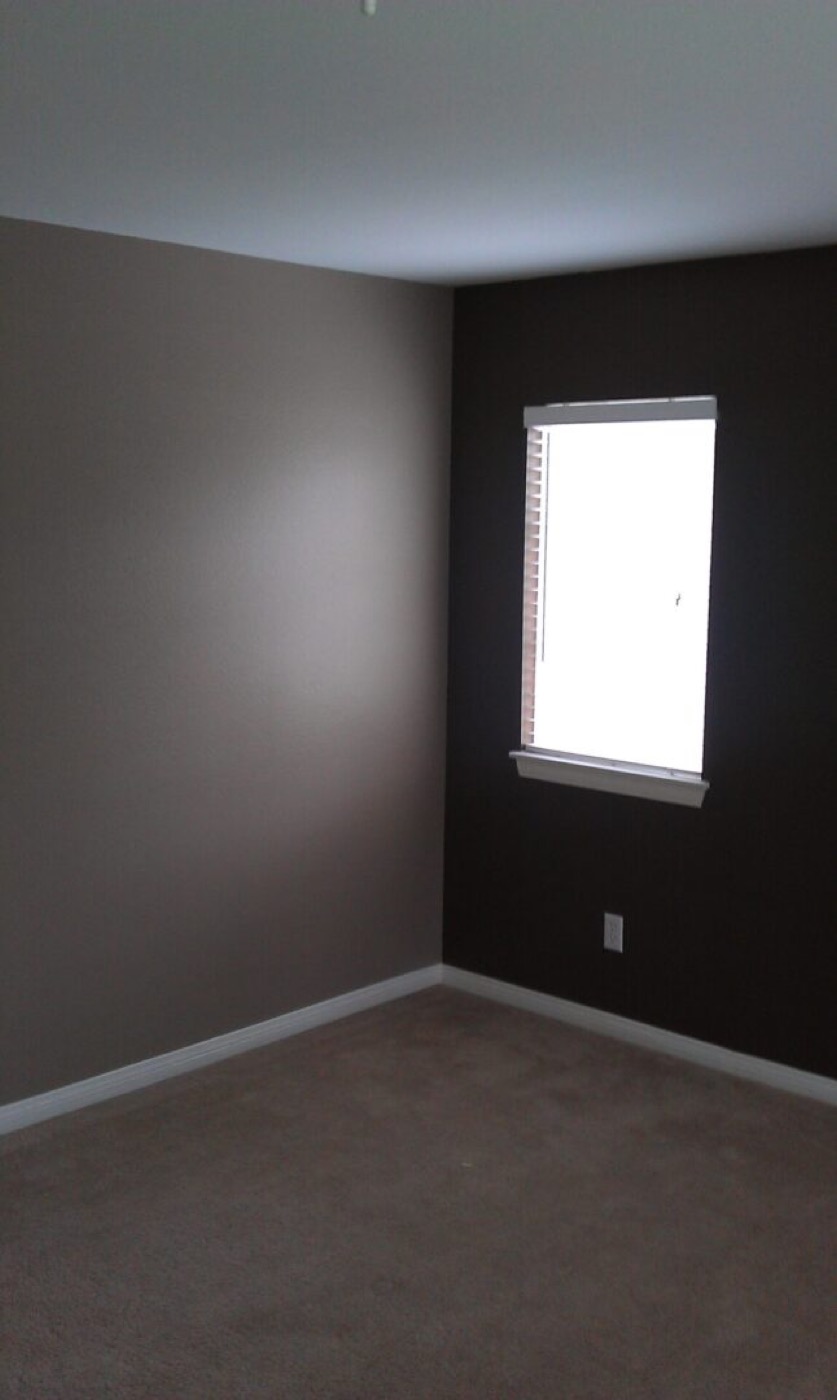
Dining Room Painting without the shortcuts
Dining rooms carry the formal colors: deeper tones, wainscot pairings, ceilings that matter. Careful two-tone work with lines sharp enough for the holiday photos. Out of Jurupa Valley, across Riverside and San Bernardino Counties, quoted from measured footage and the spread rate on the can. See the finished work or ask for a ballpark.
☎ (951) 685-1595Inside the job, before the paint
Rooms wear out quietly. One day the walls that used to be white are gray at the switches and shiny at the couch line. Interior painting resets the clock, and done at full strength it resets it for years.
Rooms are personal, and so is the disruption of painting them. The crew you get has done this in hundreds of occupied homes: same painters daily, tools staged tight, pets respected, and the day’s end leaving you a livable house every single evening. That includes people who live in associations and get letters about how the property is kept.
Who calls for this: families refreshing lived-in rooms before holidays, owners prepping to sell who need every wall listing-ready, landlords turning units on real deadlines, and people who just finished floors or a remodel and want walls that match the new standard. If your walls are the last tired thing in the room, this is the visit.
Professional shows up in small things, like arriving when expected and answering your questions straight. The painters work with you so the whole job is as comfortable as a paint job can be.
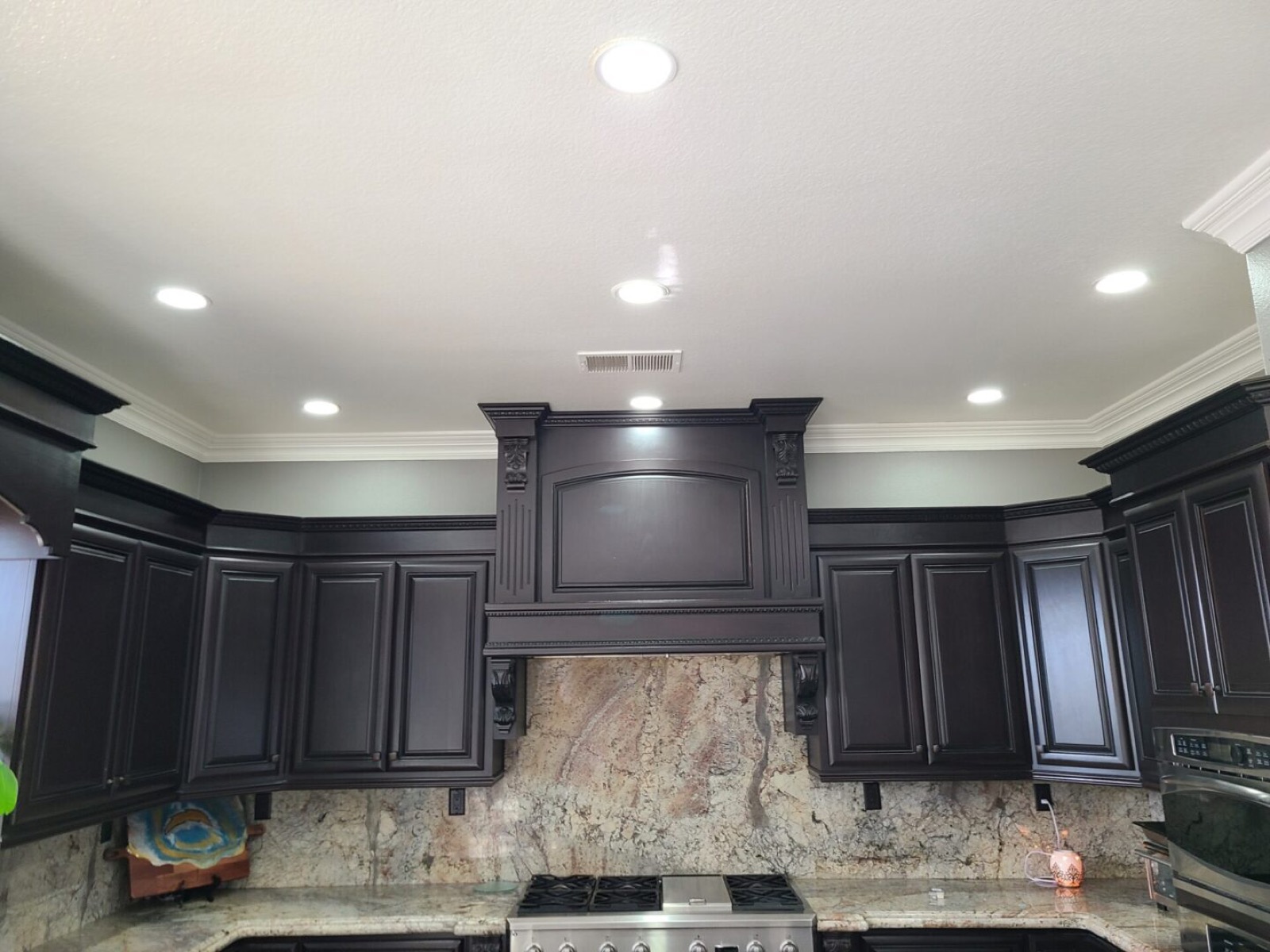
From first call to final coat
Walk and protect
Floors masked at edges and covered with drop cloths. Furniture draped with lightweight plastic sheeting. Lights, fans, sockets, and switches are masked off, and wall plates removed, then reinstalled when the paint has dried. Protection is also inventory: we note pre-existing dings so the end-of-job walkthrough is honest in both directions.
Repair and prep
Nail holes, cracks, and dings filled and sanded. Glossy surfaces deglossed. Stains sealed with the right primer so they never ghost through. Spot texturing, and/or whole wall texturing as needed. Glossy surfaces get scuffed until the new finish has something mechanical to grip.
Cut and Roll, or Mask and Spray
Cut lines are clean and crisp, while the roll coat is thick and blended. Spraying involves more masking. It applies more and thicker paint than rolling, but gives the cleanest and straightest lines. Sheen evenness is checked from the window side, where roller flashing hides.
Walkthrough and Count
The foreman goes surface by surface with you, and each thing you flag gets fixed and checked off before the crew packs up. Then the house gets put back the way you had it, with the job’s trash disposed of properly, floors swept, and everything the painters moved returned to its spot.

Specs first, brands on request
Primer indoors is not one thing: stain-blockers for water marks and crayon, bonding primers for glossy trim, drywall sealers for fresh patches. The finish system is only as honest as the primer under it, so ours gets named on the quote right beside the topcoat.
We buy paint the way a builder buys lumber: graded for the load. High-traffic areas get products engineered for scrubbing, kids, and chair backs. Low-traffic ceilings get flats that prioritize evenness. And every gallon is a known quantity, because the spread rate math only works when the product is what the spec says it is.
Built for this valley
Most streets in the Inland Empire mix more than one era of house, and the paint fails differently on each. Wood fights moisture and sun, while older stucco mostly fights cracking. Having repainted every one of those types many times over, we can usually tell you on the walkthrough what your house will need and why the last paint job wore out where it did.
The same crews run the same routes year after year, which means the painter on your ladder has probably already painted on your street. Continuity is a quality tool.
Why the low bid is the expensive one
Skipped interior prep shows fast: patches that flash through the sheen, tape lines at the ceiling, roller marks in side light, and colors that need a third coat because the first was stretched. The cost of doing it wrong is doing it again, with furniture moved twice.
There is also the quiet cost: living through a bad job twice. Furniture moved again, rooms lost again, the smell again, and the negotiation with a contractor who already has your money. Interior work rewards getting it right once, more than almost any purchase in a home.
Before you sign a low bid, let us look at it. We will tell you plainly what is covered and what is missing, and if it is a fair bid we will say that too. The owner went into business after seeing an employer stretch paint to half the spec, so we know where to look.
On the same visit
People who book this usually add something else while the crew is already here. The ones that come up most:
- Interior House Painting
- Whole Home Painting
- House Repainting
- Touch-Up Painting
- Accent Wall Painting
- Ceiling Painting
- Wall Painting
- All Interior work
Where we do it
Our crew drives out of Jurupa Valley for this, up to 50 miles each way. Cities where we do it often:
Dates that mean something
If you are taking time off work or moving things around for a paint job, the date has to be real. Ours is. We confirm it two days out and the crew arrives when we said. The same people stay on your property until the job is done, and questions during the work go straight to the lead on site.
Before you call
Come to the walk-through with questions; leave with the math. There is no preparation required, no obligation created, and no follow-up pressure campaign after. That is on purpose, and it is why the phone keeps ringing.
Questions to ask any painter, including us
Ask what happens after the last coat dries. Who do you call if something peels in year two, and does that company still answer? Ours is a 4 year standard warranty on workmanship and materials, from a shop close enough to come look. Hold any other bid up to the same question, and if you want a second set of eyes on it, bring it to us.
Terms worth knowing
Words from this corner of the trade, so any bid you read makes sense:
Cutting in. Painting the precision edges at ceilings, corners, and trim by brush before rolling the field.
Flashing. Sheen differences where patches or touch-ups reflect light differently than the surrounding wall.
Back-rolling. Rolling over freshly applied paint to even the film and work it into texture.
Spread rate. The coverage printed on the can: square feet per gallon, printed by the manufacturer for every product.
End of job walkthrough and guarantee
The final walkthrough is with the foreman who ran your job. You look at every surface together, and anything you are not happy with gets fixed on the spot. The paperwork side is simple: a standard warranty of 4 years from the date of completion on our workmanship and materials. The practical side matters more. Our shop is in Jurupa Valley, inside the same 50 mile circle we work, so if a problem turns up later we can come look at it without making you wait weeks.
Every job here gets the amount of paint the manufacturer specifies for the surface. That sounds like a low bar until you learn why it is written down: the owner spent years at a company that used half that, and he left to do right by everybody instead. It is still the rule.
Before you ask, answered
Do we have to move out while you paint?
Almost no one does. If someone in the house is sensitive to paint smell, tell us at the walkthrough and we will plan the order of rooms around it. The water based paints we use dry quickly and have far less odor than oil paints did.
How do you protect floors and furniture?
Hard floor protection on travel paths, film and drop systems in work rooms, and furniture wrapped and floated to the center. Protection is the first hour of every interior day.
Can you match the existing wall color?
A fan deck of paint colors is used to select a color that is a very close, if not an exact match. Then the wall will need to be painted corner to corner.
What sheen should I pick for walls?
The contractor will recommend sheens, based on customer needs, and provide the customer with a sheen chart.
Do you fix nail pops and cracks first?
Every time. Filling and sanding wall damage is inside the quote, not an extra that appears later. Paint over damage is damage with better lighting.
Can you work around my furniture?
Yes. We float pieces to room centers, wrap them fully, and move them back placed as found. Emptying rooms helps but is never required.
Who actually shows up?
People who have been at this a long time. The owner has 50 years of painting behind him, and the crew together has more than 100. You meet the contractor first, sometimes along with his son and job foreman Justin. The foreman and two crew members do the painting, and the foreman does the final walkthrough. All of them are employees.
How fast can you get me a ballpark?
Same visit, most of the time. We look at the surfaces, measure, and hear what you have in mind, then give you a number before we leave. The written copy follows the next morning.
Are you licensed and insured?
We have liability insurance and workman’s compensation insurance on every one of our workers.
Where do you work?
A 50 mile circle around our shop in Jurupa Valley, covering most of Riverside and San Bernardino Counties. The service areas page lists every city with its own page.
Do you use subcontractors?
Not on any job. Our employees do all of the work, which is how the crew keeps one standard from prep through cleanup.
What happens if weather interrupts an exterior job?
A short delay. The foreman finds a sensible place to stop and protects what has been done, then tells you when the crew will be back. The job still gets finished the way it was planned.
The walkthrough is free
Fifty years is how long the owner has been painting, and the crew together has more than a hundred. Put that to work on your project: book the walkthrough, and the price comes at that same appointment. It will be priced on the paint the manufacturer calls for, every coat.
Get a Ballpark