
Shed Painting that holds up to the Inland Empire
Sheds get skipped until they drag the yard down. A day of honest work: wash, scrape, prime the bare spots, paint at full strength, and the backyard looks kept again. Out of Jurupa Valley, across Riverside and San Bernardino Counties, quoted from measured footage and the spread rate on the can. See the finished work or ask for a ballpark.
☎ (951) 685-1595The trade behind the finish
Out here the west face of a house lives a harder life than the north face by years. We plan exterior work around that arithmetic: more prep where the sun hits, full film build everywhere, and products chosen for this climate, not a national average.
Curb appeal is the visible half; the invisible half is envelope protection. Paint is the sacrificial layer that keeps water and UV off your stucco and wood, and replacing that layer on schedule is the cheapest structural maintenance a building gets.
Who calls for this: owners whose houses were painted eight-plus years ago and can feel it, buyers who just closed on a faded gem, HOAs holding a standard, and sellers who know exterior paint returns more at listing than almost any spend. If the sun has been winning, this is how the house wins back.
Our painters are employees who have been doing this a long time, so they move quickly and know how to work in a house that people are living in. Your comfort during the job matters to them as much as the finish.

The sequence, walk-through to walkthrough
Wash the envelope
The house gets washed at the right pressure per surface. Paint over dust is a warranty nobody can honor. Wash day doubles as inspection day, and findings go in your quote notes.
Repair and rebuild
Stucco cracks, wood rot, failed caulk: cut out, filled, and rebuilt with materials that move with the house. Repairs cure before primer, primer cures before finish. Calendar pressure never reorders chemistry.
Prime what needs it
Bare wood, patched stucco, chalky faces, and raw metal get their specific primers. Primer is where adhesion is decided. Primer choice is substrate law: what binds chalk will not seal tannin, and the truck carries both.
Paint the envelope
Sprayed and back-rolled or brushed by surface, at the amount the manufacturer specifies. The sun-side faces get no discount. Back-rolling after spray pushes film into texture instead of tenting over it.
Detail and walkthrough
Lines cut at the roofline and windows, overspray checked, yard cleaned nightly, and a final walkthrough with the foreman. Nightly cleanup is non-negotiable: tools staged, ladders down, yard walkable.
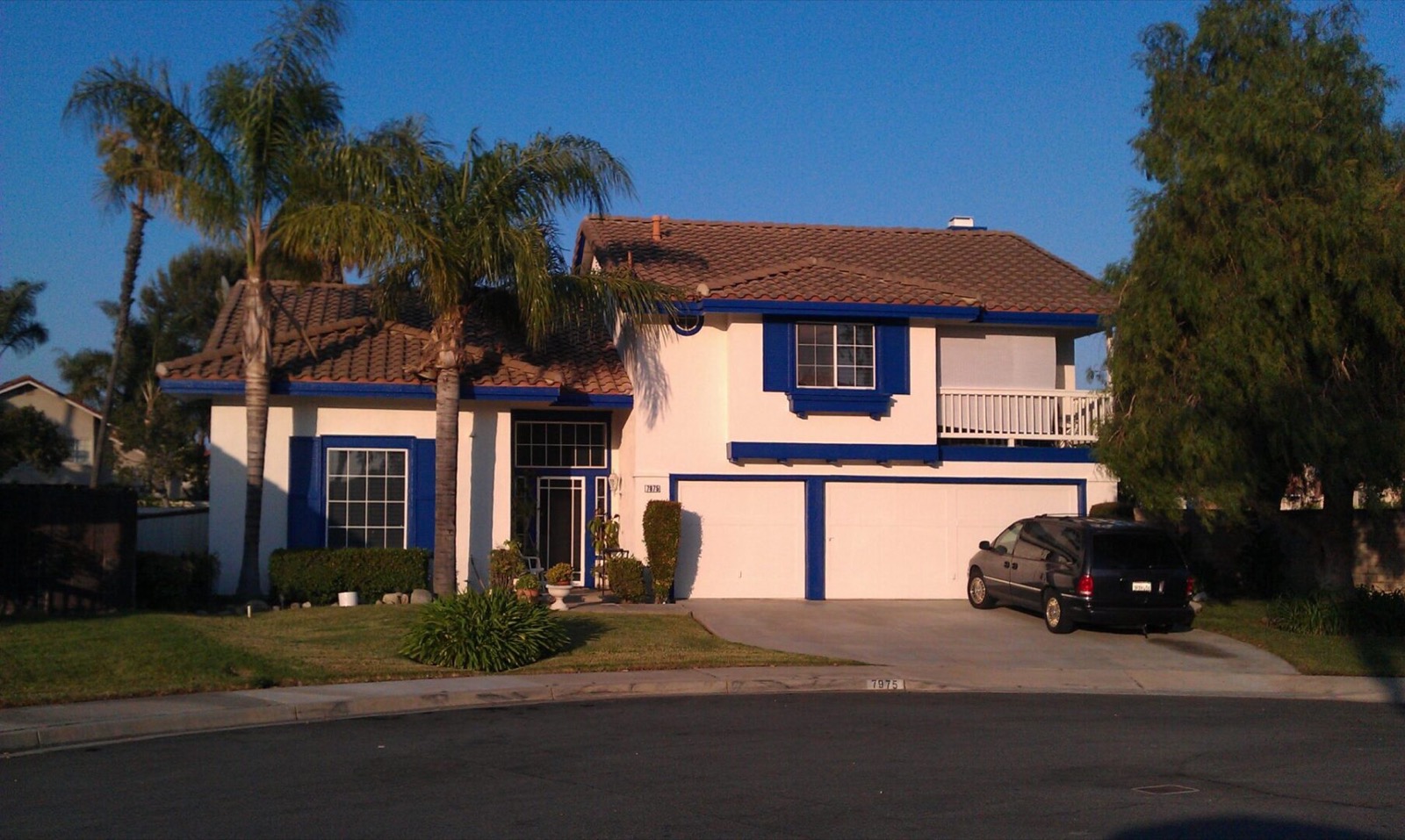

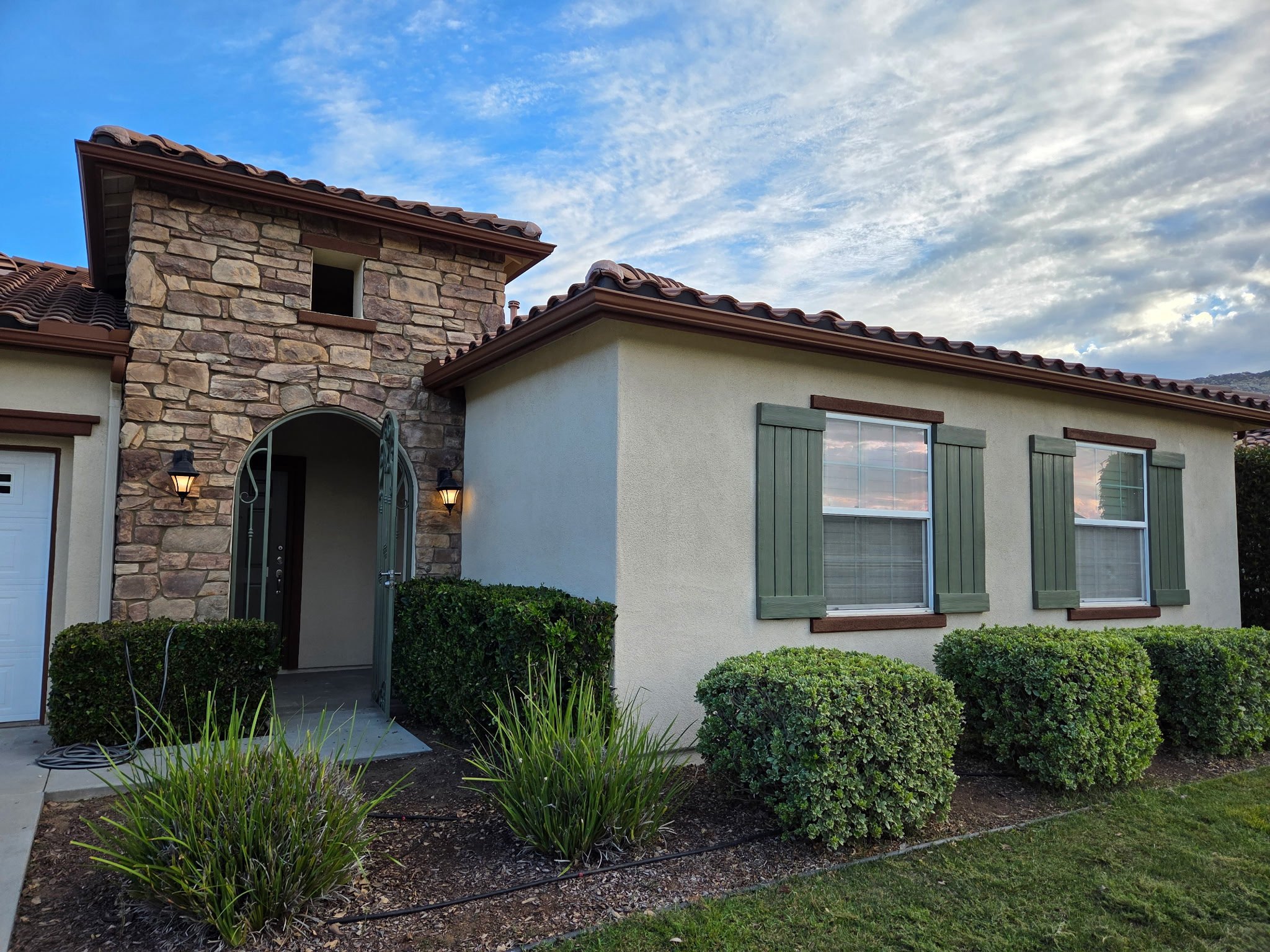
What goes on your surfaces, by name
The Inland Empire is a torture test that some paint lines quietly fail. We stay loyal to products that have survived our own ten-year drive-bys: acrylics that flex through 40 degree temperature swings, primers that bind chalky stucco, and enamels that keep fascia lines crisp against the roofline.
Stucco, wood, and metal on the same house means three primer systems on the same job, and that is exactly what we bring: masonry sealers for the body, oil or acrylic wood primers for fascia and trim, rust-inhibitive metal primers for iron and rails. One truck, the whole spec.
Built for this valley
Wind is the variable in Beaumont and up toward Cajon. It carries dust onto wet paint and dries the surface faster than the product wants. On those jobs we save spray work for calm hours and switch to brush and roller when the air will not settle. The crew has painted in those passes long enough to read the day before the first can is opened.
That local mileage is also why our ballparks land accurate: we have painted enough houses like yours, in weather like yours, to quote from experience instead of hope.
Where cheap jobs go to fail
A thinned exterior job in this sun starts chalking in year three: color fades unevenly, stucco hairlines reopen, and south-facing trim peels first. Repainting early costs more than painting right once, and the sun keeps perfect records.
And the envelope pays interest on shortcuts. Paint that fails early exposes stucco and wood to the water and UV it existed to block, so the second bill often includes repairs the first job was supposed to prevent. Cheap exterior painting is deferred carpentry.
Ask any bidder whether the job is priced on the amount of paint the manufacturer specifies for each surface. Our owner learned to ask after watching an employer use half of it. Send us the bid and we will go through it with you.
Usually booked together
Related jobs we can price at the same walkthrough and schedule alongside this one:
- Exterior House Painting
- Stucco Painting
- Brick Painting
- Masonry Painting
- Concrete Painting
- Porch Painting
- Patio Painting
- All Exterior work
Where we do it
From Jurupa Valley, the crew covers a 50 mile radius for this service. A few of the cities on that route:
How booking actually works
You will not be asked for money on work we have not started. That is the short version of how booking goes. The longer one: you call, we come out and walk the job, and the price is given at that appointment, with the written copy the next morning. Once you approve it, you get a start date and how long the job should take, based on how fast this crew actually works on jobs that size.
Before you call
You do not need to prepare anything for the walk-through, but two things speed the number: knowing which surfaces are in and which are out, and mentioning the deadline if one exists. The rest is our job to see.
Questions to ask any painter, including us
A fair bid and a light bid can look identical on the bottom line. The difference lives in the details: prep itemized or waved at, product lines named or generic, licensing offered or dodged. Bring us any competing bid and we will translate it into checkable math, even when the honest answer is that it is a good bid you should take.
Terms worth knowing
Words from this corner of the trade, so any bid you read makes sense:
Elastomeric. A flexible high-build coating that bridges hairline stucco cracks and moves with the wall.
Chalking. The powdery surface of UV-degraded paint; it must be washed and bound before recoating.
Film build. The applied thickness of the coating system; longevity lives or dies here.
Back-brushing. Working sprayed material into the surface by brush so it grips rather than rests.
Tannin bleed. Wood extractives staining through paint; blocked by the right primer, never by more topcoat.
End of job walkthrough and guarantee
Every painter who worked on your house is our employee, so if something needs attention later, we know exactly who did it, and the company that employs them is the one you call. That is part of what our standard warranty means: 4 years from the date of completion, covering workmanship and materials, from a company based in Jurupa Valley that answers for its own people.
Half the paint the spec called for. That is what the owner watched an employer put on walls, job after job, and it never sat right with his conscience. So he went into business for himself with one mission, to do right by everybody, and that still decides how every can gets used.
Asked on every walk-through
What time of year is best for exterior painting here?
Spring and fall are ideal, but the Inland Empire season runs long. We chase surface temperature, not the calendar: mornings on the sun side, shade rotation at midday.
Do you spray or brush the exterior?
Both, by surface. Spray for even film on the body, back-roll to work it into stucco, brush where control beats speed. The method serves the film build, never the schedule.
How many years should the repaint last?
Eight to twelve on a properly prepped two-coat job, depending on exposure and color depth. The sun side ages first, which is why it gets no shortcuts.
Do you power wash before painting?
Always. Paint bonds to surfaces, not to the chalk and dust on them. The wash is step one of the job, at pressures each surface can take.
Will you paint over cracked stucco?
No. Cracks get opened, filled with elastomeric or stucco patch as the crack demands, and textured to match. Then paint. Painting over cracks is renting a finish, not buying one.
Do I need to be home while you paint outside?
No. Most exterior customers hand us gate access and go live their week, with photo updates as sections finish.
Are you licensed and insured?
We have liability insurance and workman’s compensation insurance on every one of our workers.
Where do you work?
Our shop is in Jurupa Valley, and we work out to roughly 50 miles in every direction. The service areas page lists each city we cover, grouped under Riverside and San Bernardino Counties.
Who actually shows up?
You will always know who to ask. The contractor handles the first visit, and sometimes his son and job foreman Justin comes along. While the painting is going on, the foreman is your contact, working with two other crew members, and he is also the one who walks the finished job with you. Every one of them is our employee.
How fast can you get me a ballpark?
Quicker than most people expect. The contractor who comes out to walk the job can usually put a number on it before he leaves your property, and the written version lands the next morning.
Do you use subcontractors?
Never. The crew is made up of our own employees, the same people from the first day of the job to the last.
What happens if weather interrupts an exterior job?
The crew stops where the work can be left safely and covers anything still drying. You get a call with the new date right away, and we pick up where we left off.
Ask for a price
You get the price at the walkthrough itself. Tell us which rooms or walls need work and we will come measure. The number we hand you assumes the full amount of paint the manufacturer specifies, since that is the only way we do the work.
Get a Ballpark