
Fence Sealing by a crew with fifty years on the brush
A sealed fence sheds the sprinkler water that destroys an unsealed one. Sprayed and back-brushed at the coverage printed on the label. Out of Jurupa Valley, across Riverside and San Bernardino Counties, quoted from measured footage and the spread rate on the can. See the finished work or ask for a ballpark.
☎ (951) 685-1595Inside the job, before the paint
The Inland Empire’s sun, dust, and sprinkler water are a stress test for every outdoor surface. Coatings and sealers are how the surfaces pass it, and application discipline is how the coatings do.
A coating is a system commitment, and honest contractors say so up front: surface, primer, body, and topcoat engineered together, applied in windows the chemistry dictates. Done right it outlives paint several times over. Done fast it fails in one season, spectacularly.
Who calls for this: garage users tired of dusting concrete, pool owners burning feet every July, and facility folks protecting metal and slabs from the maintenance spiral. If a surface works for a living, a coating is its insurance.
The painters work quickly and professionally to make your experience a great one, and they work with the customers to make this the most comfortable painting experience as possible.
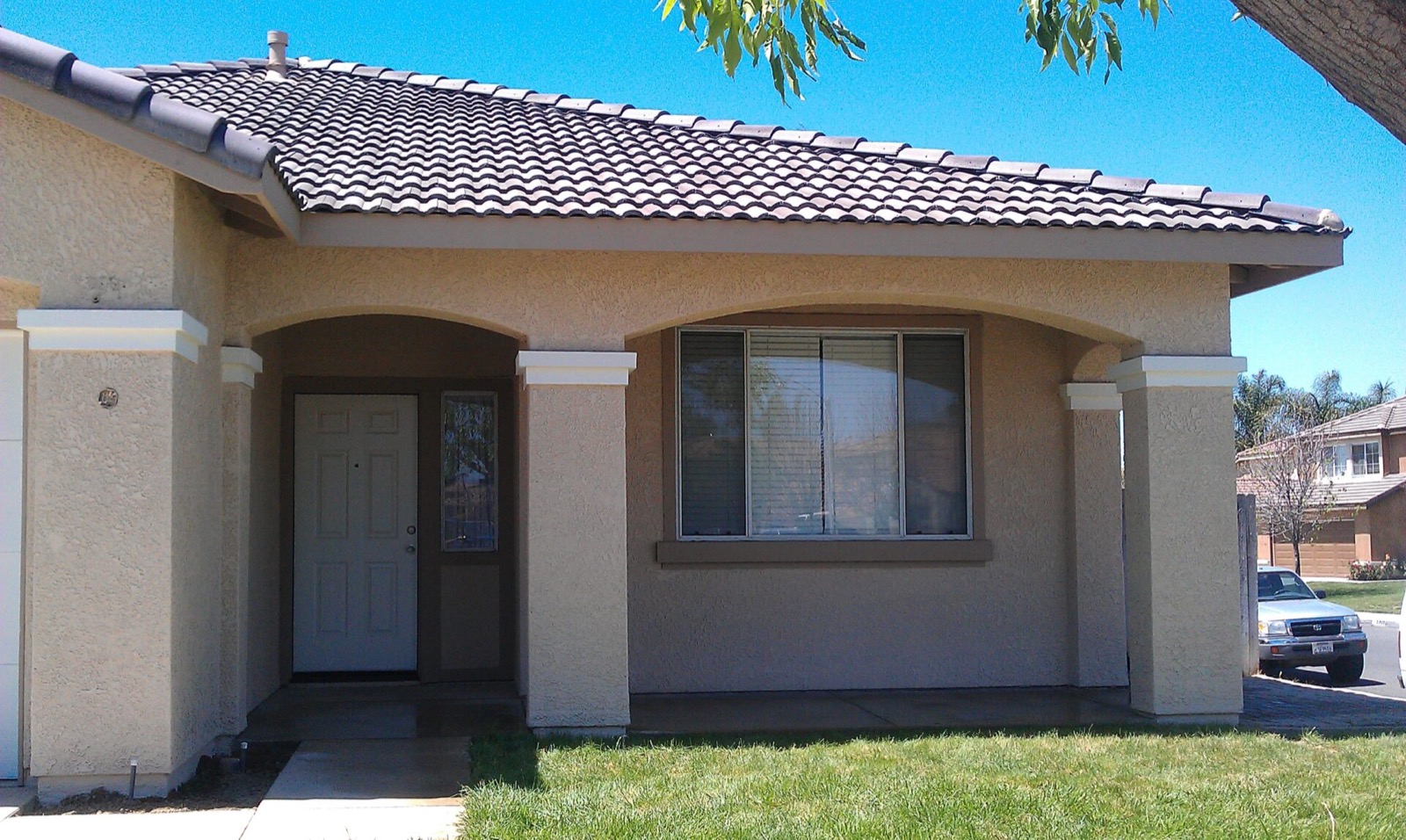
From first call to final coat
Test before anything
Moisture, hardness, and previous-coating checks decide the system. Coatings fail at the tests that never got run. Failed moisture tests stop the job. It costs a delay and saves the entire coating.
Profile the surface
Grinding, etching, or sanding to the profile the datasheet demands. Adhesion is mechanical before it is chemical. Profile is verified by feel and gauge, not by how long the grinder ran.
Repair and fill
Cracks routed and filled, spalls patched, joints honored. The coating will telegraph anything left unfixed. Repairs use the system’s own patch products so cure rates match through the sandwich.
Apply the system
Primer, body coats, and topcoat at specified mil thickness, inside the recoat windows, with mixing ratios measured, not eyeballed. Recoat windows are chemistry law: too early traps solvents, too late loses the bond.
Cure and release
Full cure time honored before traffic. We tell you the real number, not the optimistic one, because callbacks cost us both. Release dates come with a magnet or a sign, because tires do not read invoices.
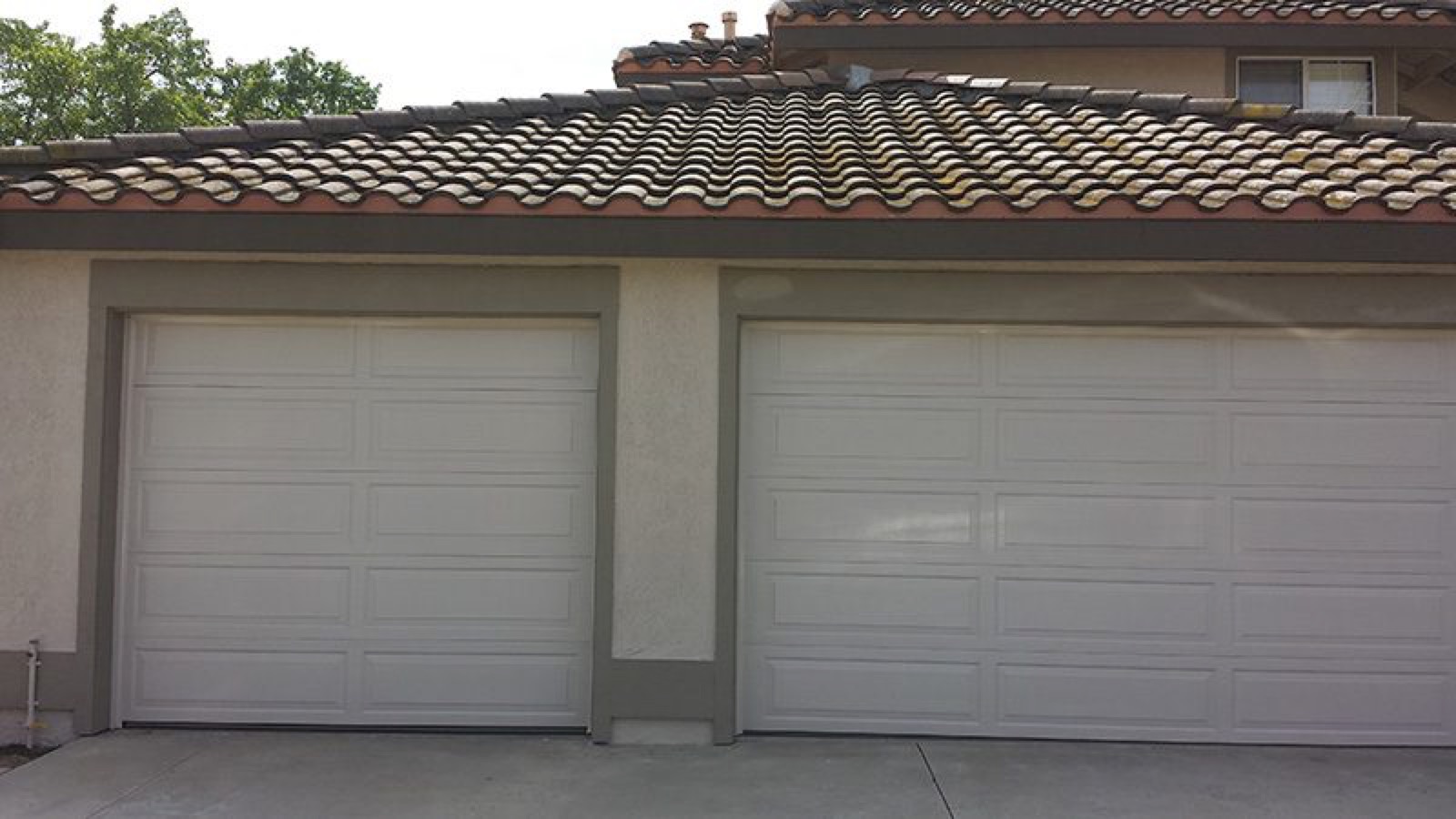

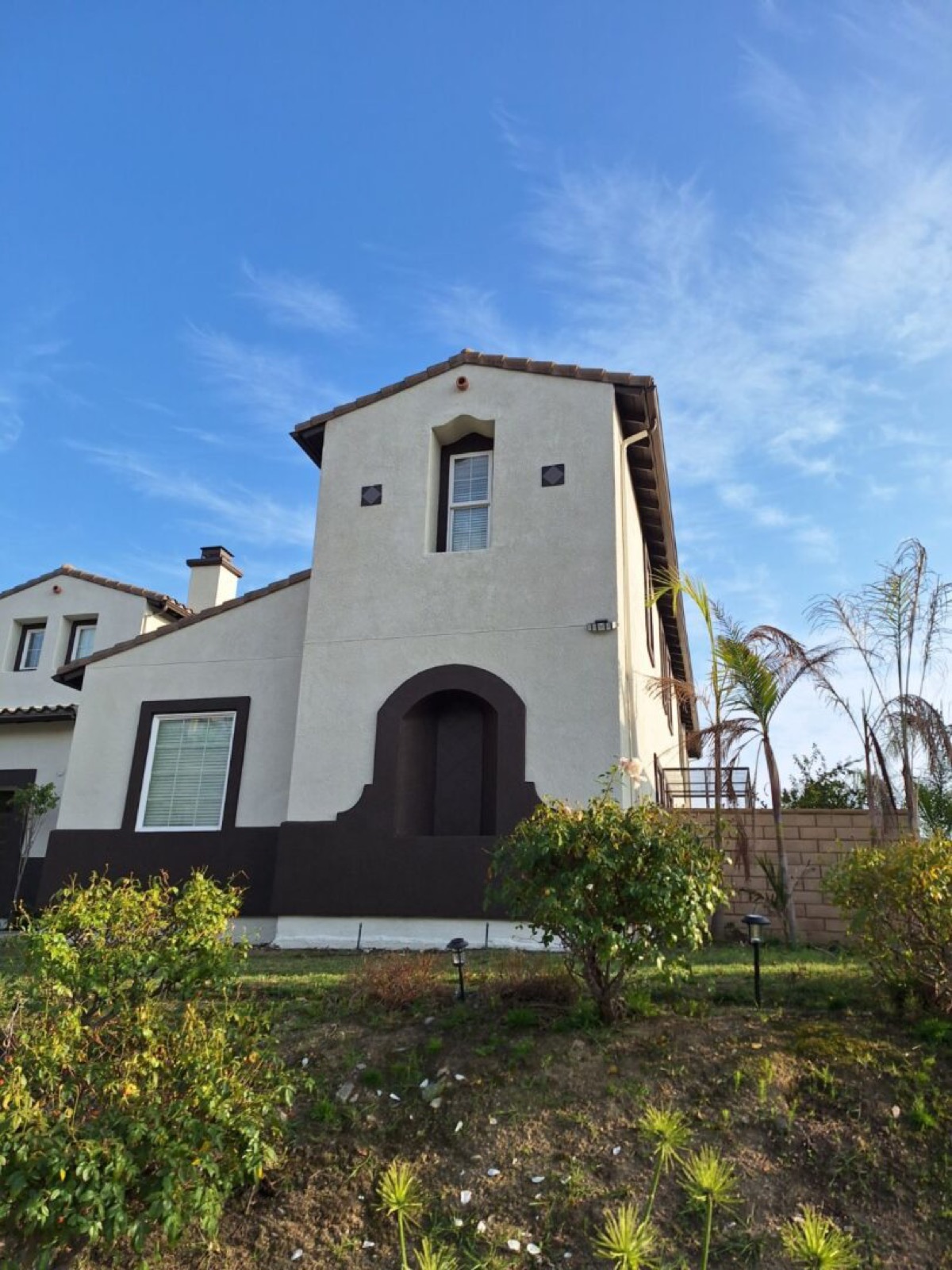
Specs first, brands on request
Cure schedules get stated honestly: foot traffic, furniture, vehicles, and full chemical cure are four different dates and we put all four in writing. A coating rushed back into service is a coating you paid for twice.
Surface prep for coatings is measured: concrete ground to profile, moisture tested with meters rather than guesses, previous coatings identified before anything new commits to living on top of them. Preparation is 70 percent of a coating’s life expectancy.
Built for this valley
The Inland Empire builds in generations: craftsman wood downtown, postwar stucco in the first rings, tract two-stories from the 80s and 90s, and new construction still pouring east. Each generation fails and revives differently, and we have repainted them all enough times to know their habits before the walk-through. Whatever era your property is, it is not our first one.
The same crews run the same routes year after year, which means the painter on your ladder has probably already painted on your street. Continuity is a quality tool.
Why the low bid is the expensive one
Coating failures are dramatic: hot tires peeling garage floors in sheets, sealers blushing white over trapped moisture, deck systems flaking by spring. Every one traces to a skipped test, a rushed cure, or coverage stretched past the label.
Coating failures also close spaces: a garage floor redo exiles the cars for another week, a pool deck redo eats another chunk of summer. The cure windows you respect once beat the ones you serve twice.
The owner started this company after watching an employer stretch material to half the spec, job after job. If you have a bid that seems light, send it over and we will tell you honestly what it covers and what it quietly leaves out.
On the same visit
Most calls for this work bring neighbors with them. These run on the same visit or the same mobilization:
- Basement Floor Coatings
- Garage Floor Painting
- Driveway Coatings
- Pool Deck Coatings
- Rust Prevention Coatings
- Corrosion Protection
- Marine Coatings
- All Coatings work
Where we do it
Everything on this page runs across our 50 mile circle from Jurupa Valley. Popular routes for this work:
Dates that mean something
Booking works the way you wish every trade worked: quick walk-through, written number, firm date. We confirm two days out, show up when we said, and keep the same faces on your property until it is done. Questions during the job go straight to the lead on site or to John’s own phone, and the answer you get is the answer that happens.
Before you call
Come to the walk-through with questions; leave with the math. There is no preparation required, no obligation created, and no follow-up pressure campaign after. That is on purpose, and it is why the phone keeps ringing.
Questions to ask any painter, including us
A fair bid and a light bid can look identical on the bottom line. The difference lives in the details: prep itemized or waved at, product lines named or generic, licensing offered or dodged. Bring us any competing bid and we will translate it into checkable math, even when the honest answer is that it is a good bid you should take.
Terms worth knowing
Words from this corner of the trade, so any bid you read makes sense:
Mil thickness. Coating depth in thousandths of an inch; systems are engineered and applied to it.
Moisture vapor test. The slab test that decides whether a floor can be coated at all yet.
Pot life. The working minutes a mixed two-part product allows before it sets in the bucket.
Recoat window. The time range when the next coat bonds chemically; early traps, late peels.
Hot-tire pickup. Coating failure where warm tires pull weak film off garage floors.
End of job walkthrough and guarantee
The job ends with a walkthrough, not an invoice. You and the foreman walk every surface in good light, and anything that bothers you gets fixed before we consider the work done. We firmly stand behind our workmanship and the materials we use, with a standard warranty of 4 years from the date of completion. The shop is twenty minutes away, and a warranty from a company that answers its phone is worth more than a longer one from a company that does not.
The rule this company runs on came from the owner watching an employer stretch paint to half the spec, job after job, and refusing to make that his own name’s habit: do right by everybody. Every page of this site says it because every job on the schedule proves it.
Before you ask, answered
Why did my last garage floor coating peel?
Almost always moisture or prep: no moisture test, no grind, hot-tire pickup by summer. Our systems start with the tests that prevent exactly that.
How long before we can use the surface?
Real cure times, honestly stated: usually light foot traffic in a day, vehicles or furniture later per system. We put the real number in writing.
Is sealing worth it on concrete that looks fine?
Sealing is cheapest exactly when it looks fine. Once water, oil, and salts get into the surface, you are paying for repair plus the sealer you skipped.
Flake, solid, or clear for a garage floor?
Flake hides dust and wear best, solid reads cleanest, clear shows concrete honestly. All three are real systems when applied to spec; we will match one to how you use the space.
Do coatings work on older concrete?
Often better than on new pours, once ground and repaired. Age matters less than moisture and soundness, and we test both before promising anything.
Can you coat over an existing coating?
Only after identifying it and testing adhesion. Sometimes yes with the right prep, sometimes removal first is the honest answer.
Who actually shows up?
First the contractor, and sometimes his son and job foreman Justin. Later, it will be the foreman and 2 other crew members. At the end of the job, it will be the job foreman to do the final walkthrough. Keep in mind that this crew has a combined painting experience of more than 100 years. Our workers are our employees.
How fast can you get me a ballpark?
Usually while we are still standing in your driveway. We measure, talk through what you want, and most walk-throughs end with a number on the spot and the written version the next morning.
Are you licensed and insured?
We have liability insurance and workman’s compensation insurance on every one of our workers.
Where do you work?
A 50 mile circle around our shop in Jurupa Valley, covering most of Riverside and San Bernardino Counties. The service areas page lists every city with its own page.
Do you use subcontractors?
We do not use sub-contractors. The people on your property are our employees, trained to the same standard.
What happens if weather interrupts an exterior job?
We pause at safe stopping points, protect the work in progress, and give you the revised date immediately. Chemistry beats calendars, every time.
The walkthrough is free
Tell us what needs doing. The walkthrough happens quickly and a price is given at that appointment. Fifty years on the brush, a hundred across the crew, and one rule that has never bent: we use the manufacturer specified amount of paint on all surfaces.
Get a Ballpark