
A Corona house wash that gets into the eaves and the stucco texture
Stand under the eaves of a hillside home here and take a close look. The gray film on the soffits, the dust caked into the stucco texture, the spotty band along the bottom of the walls: all of it sits between your house and its next coat of paint. We wash it off carefully and tell you what the clean wall shows. Browse houses we have finished, or get a ballpark on yours.
☎ (951) 685-1595Wind-blown dust packed into the texture
Hillside houses in Corona catch canyon wind, and that wind carries fine dust. It settles into every low spot in a stucco finish and packs down, worst on the walls that face into the wind. From the curb the house simply looks a shade duller than it ought to. Up close, the texture is loaded with grit a garden hose will not move.
That packed dust matters the moment paint is on the schedule. A coat laid over it grabs the dust first, and a wall that looked clean enough ends up with a weak grip across its whole face. The dust also hides the small things we want to find before painting, like hairline cracks and chalky patches on the sun side.
The walls that take the hardest sun and wind usually need a second pass. We look at them wet and look again once they have dried, because packed dust sometimes shows itself only after the water is gone.
The 1970s ranch homes near the downtown grid get the same care with a lighter hand on the wood. Those houses carry long runs of fascia and open eaves, and too much force on old wood lifts the fibers until the board turns fuzzy. Fuzzy wood soaks up paint in blotches, so it gets low pressure, a soft brush where needed, and patience.
Washing a two-story without soaking what sits behind the trim
Keep the spray angled down the wall
Water aimed upward at a window head, a trim band or the lap of a board gets driven in behind it, where it has no way out. We keep the wand pointed down and along the surface, so water sheds off the house the way rain would.
Go easy on windows and their seals
Window frames, weep holes and tired caulk do not like a direct blast. We wash around them at low pressure and clean by hand where that is safer, and we write down any caulk that has cracked so it gets replaced before paint.
Reach the top without standing on mud
Extension wands and careful ladder placement get us up to the second story. Ladders never go on a soaked slope or fresh mud. High walls get washed before low ones, so rinse water runs down over surfaces that are already clean.
Protect what lives at the base of the wall
Outlets and light fixtures get covered, doors and vents get closed, and plants along the wall get wet down before any cleaner touches the house and rinsed again after. Cars come out of the driveway before the first wall is sprayed.
Garage doors, eaves and the surfaces under things
Most people judge a clean house from the sidewalk. The dirt that ruins paint lives in places you only see from a ladder or flat on your back: the underside of the eaves, the soffits, the top edges of the garage door panels, the lip of trim over the garage.
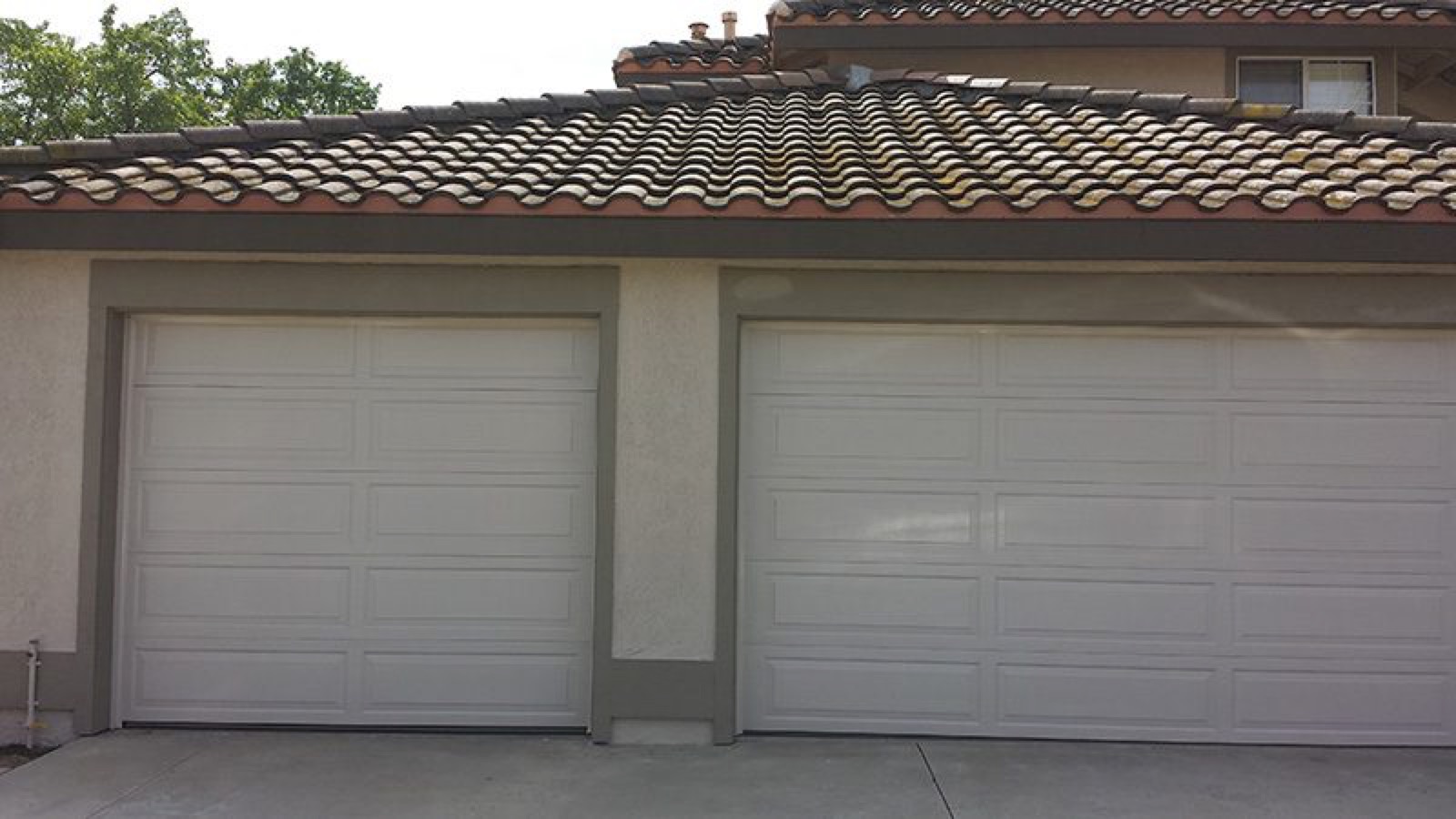
Garage doors collect a film of road dust and exhaust along the lower panels, and recessed panels hold dirt in their grooves. We wash them gently and check the trim framing them, which is often weathered and dry by the time a house is ready for paint. Eaves and soffits gather cobwebs, old nests and a gray layer of dust that sheds straight into fresh paint when it is left there.
All of these get painted in a full exterior job. Washing them properly keeps grit out of the brush on the parts of the house that frame your front door and your garage, which are the parts everyone sees first.
What a clean wall tells you about the house
A wash is the most thorough inspection a house ever gets. With the dust gone, loose paint lifts at the edges, failed caulk shows its gaps, and bare wood on trim that was barely covered stands right out. Trim around a garage door is a common example: weathered and dry, the kind of surface that needs scraping and primer before a finish coat will stay.
We write down what the clean wall shows us and go over it with you, paint job or no paint job. It is your house. You should know what condition it is in.
On the sun sides of a hillside home, a wash often turns up the rest of the story. A lot of our Corona calls are repaints where the last crew went thin on those walls, and once the dust is off you can see it plainly: old color worn through to primer high on the south and west faces, while the shaded side of the same house still looks decent.
Sprinkler marks along the lower walls
The bottom few feet of a Corona wall usually show exactly where the sprinklers point. Overspray leaves a band of white or tan spots, sometimes a hard crust, sometimes staining that has soaked down into the stucco. Plain water barely touches any of it, and more pressure mostly damages the wall.
A cleaner that does the work, then a gentle rinse
Mineral deposits come off with a cleaner made for hard-water scale, given time to sit and then rinsed at low pressure. Heavy buildup can take more than one round, and some old staining will lighten without vanishing completely. We tell you which kind you have before we start, so you know what to expect at the end.
Keeping the band from coming back
After the wash we point out the heads that are hitting the house. Turning or adjusting them keeps fresh paint from picking up the same band of marks within a season, and that small fix is far cheaper than repainting the bottom of the house a second time.
Yard walls pick up the same marks and get the same treatment, with extra care on painted block where the old finish is already coming loose, so the wash does not strip what should stay.
What Corona homeowners ask before a wash
Why does my stucco still look dull after I hosed it off?
Hose water rinses the surface but leaves dust packed into the texture, especially on walls facing the wind. It takes a detergent that loosens the grit and a controlled rinse from the top down. Once it is truly clean, the stucco usually looks a shade brighter than you remember.
Can you wash the second story without a lift?
In most cases, yes. Extension wands and ladders set on firm ground reach the upper walls, and we wash from the top down. If a steep slope or a tight side yard makes that unsafe, we tell you on the walkthrough and plan another way to reach it.
Will water get inside around my windows?
Not the way we wash. Spray stays angled down and along the wall, away from window heads and seals, and we clean frames at low pressure or by hand. Any cracked caulk we come across gets written down so it can be replaced before painting.
Do you clean the eaves and the garage doors too?
Yes, both. Eaves and soffits hold cobwebs, nests and dust that would otherwise end up in fresh paint. Garage doors get washed gently, grooves included, and we check the trim around them for weathering that needs attention before a finish coat.
What if washing uncovers peeling paint or rot?
We show you. A clean wall makes loose paint, failed caulk and soft wood easy to spot. You get a plain list of what we saw, and whether each item needs repair, needs prep, or needs nothing at all before any painting happens.
Should I fix my sprinklers before you come out?
It helps to know which heads hit the walls, but you can wait. We point them out after the wash. What matters is getting them adjusted before paint goes on, so the new finish does not pick up the same band of spots along the bottom.
Cleaning jobs that often share the day
When the rig is already running at your place, these are easy to add:
More of our Corona work
A wash usually leads into one of these. The full list lives on our Corona page.
Let us see what is under the dust
Tell us when the house was last washed or painted, and we will come look at the walls, the eaves and the low spots. The ballpark comes at that visit, along with an honest read on what the clean wall is likely to show.
Get a Ballpark