
An exterior repaint that has to survive a Riverside decade
Out here the sun grades the work. Not at the walkthrough, but at year four, when the south wall has either held its color or gone chalky and the difference traces straight back to prep and film thickness. Look through the finished work first, then ask for a ballpark on yours.
☎ (951) 685-1595Your house does not fade evenly
Walk any Riverside street and look at the same house from two sides. The north elevation still holds its color. The west wall, the one that eats the afternoon, has gone half a shade lighter and feels faintly powdery if you drag a hand across it. That is the same paint, applied the same day, by the same crew.
Ultraviolet light breaks down the resin that binds pigment into a film. As the binder goes, loose pigment sits on the surface. That is chalking, and it is the first honest signal that a coating is running out of life.
Heat compounds it. Summer surface temperatures over 140 degrees on west walls mean the film is expanding and contracting every single day, working every seam, every caulk joint, every place where a previous painter cut a corner.
Where the years actually come from
Washing off what nobody can see
Chalk, road film, and sprinkler hard water sit on every Riverside exterior. Paint applied over chalk bonds to the chalk, not the wall, and it releases in sheets a couple of summers later. Washing is the least glamorous hour of the job and the one that decides whether anything else matters.
Caulk and the joints that move
Every window perimeter, trim junction, and penetration flexes daily under the temperature swing. Old caulk goes brittle, splits, and quietly lets water behind the finish. We cut it out and replace it rather than smearing new caulk over a failed bead, because the second version fails on the same schedule as the first.
Primer where the surface demands it
Bare wood, patched areas, chalked stucco, and anywhere a stain will migrate. Not everywhere as a talking point, and not nowhere to save an afternoon. Primer is a decision made surface by surface on the walk-through, and it is the reason a repaint stops looking patchy at year three.
Full film build, on the hard sides especially
We use the manufacturer specified amount of paint on all surfaces. That phrase does most of the work in this business. Putting on the amount the manufacturer specifies, at the spread rate printed on the can, gives you the film thickness the chemists tested. Stretched material gives you a thinner film that meets the same sun with less to spend.
Painting to the thermometer, not the clock
Exterior season runs long here, which is a genuine advantage over most of the country. It also produces the single most common mistake we see on failed jobs: painting a wall that is too hot to paint. Air temperature can read a comfortable ninety while the west stucco in direct sun is fifty degrees hotter than that.
Paint applied to a hot surface flashes off before it can level and before it can wet into the substrate. You get a film that looks fine on the day and has poor adhesion underneath it. That is a job that fails early for reasons no homeowner could have spotted at the walkthrough.
So in July and August our crews chase shade around the house. East elevations early, north through midday, west walls late in the afternoon once the sun has come off them. It makes the day less efficient and the finish considerably better. Nobody sees that trade at the end of the job. Everybody sees it at year eight.
When to book
The calendar fills from spring through early fall, so the smart move is calling a month before you think you need to. Fall and the mild stretch of winter are underrated for exterior work here: milder surface temperatures, longer open time, and a schedule that is not competing with everyone else on your block who waited for June.
Weather can push the jobs back a bit. When it does, we pause at safe stopping points, protect the work in progress, and give you the revised date immediately.
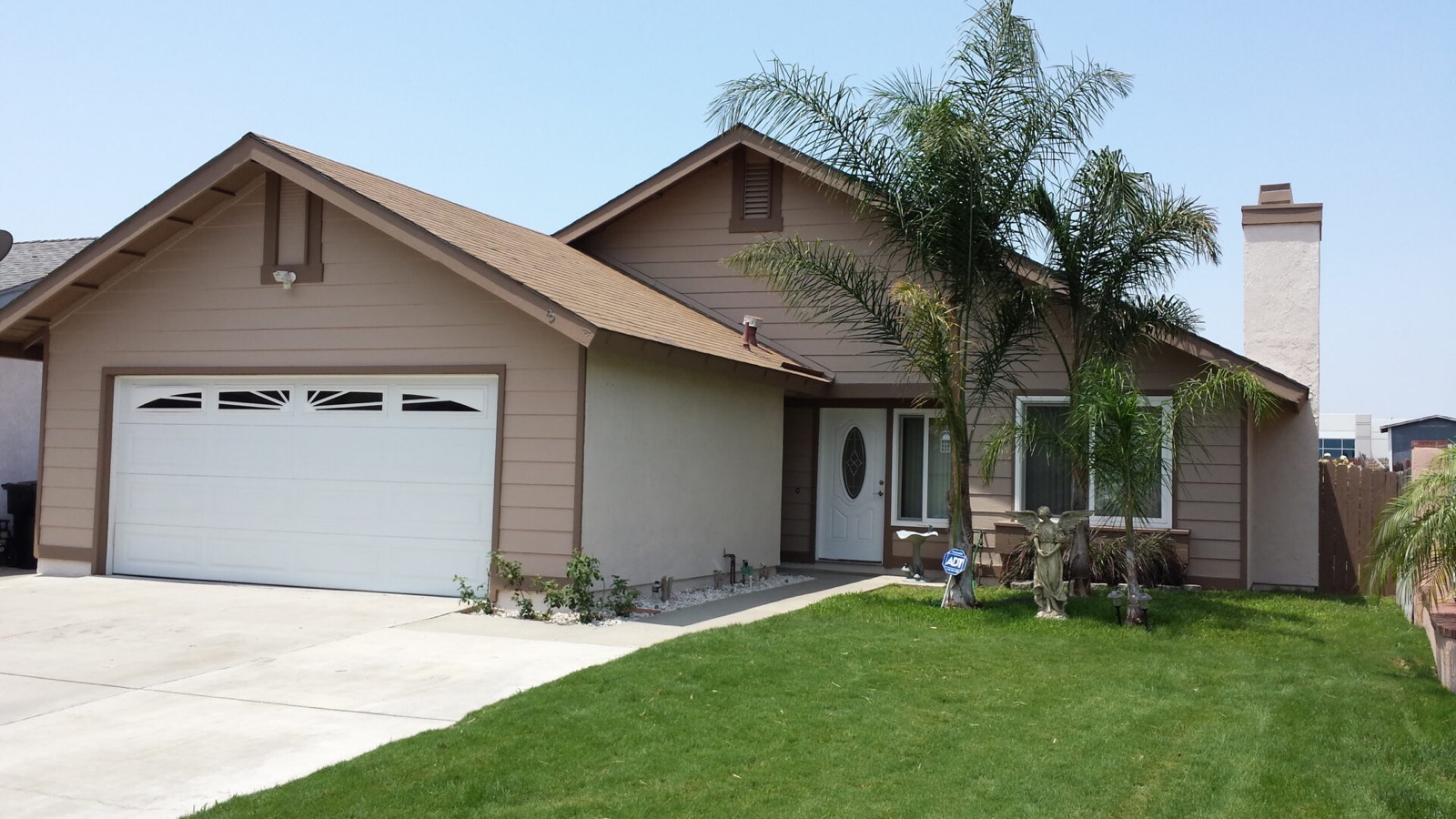
What a stretched exterior job looks like at year four
Chalking you can wipe onto a white cloth. Color that has drifted on the hard elevations while the north side still matches the original. Caulk lines split open at the window heads. A finish that looks less like paint and more like a stain that soaked in.
Done with full prep and the manufacturer specified amount of a quality product, an exterior here holds for eight to twelve years, and which end of that range you land on is mostly about exposure and color. A south or west wall in a dark color earns the short end. The same job stretched thin starts failing in the third summer and usually needs a full repaint by the fifth, and the second job costs more than the first because the failed film has to come off before anything else goes on.
The owner started this company after watching an employer stretch material to half the spec, job after job, and could not square it with his conscience. If you have a bid in hand that seems light for the square footage, send it over and we will tell you honestly what it covers and what it quietly leaves out.
Work that belongs on the same visit
An exterior repaint is the one time a ladder is already against every wall of your house:
The rest of our Riverside work
Same crew, same rule about gallons, on the rest of the property:
Color, and living with it for a decade
Deep saturated colors fade faster than light ones, because the organic pigments that make them are the ones ultraviolet light attacks first. That does not mean you cannot have a dark body color in Riverside. It means the conversation about product line and pigment quality matters more than it would in a coastal town, and we would rather have it with you before the order goes in.
Where to look at a sample
On the actual wall, on the sunniest elevation, at three in the afternoon. A chip held up in a garage tells you almost nothing about how a color behaves on a west-facing stucco field with the sun full on it. A fan deck of paint colors is used to select a color that is a very close, if not an exact match, when you are matching something existing.
HOAs and approvals
Historic districts also mean picky HOAs and design review in spots, and we paint to match that scrutiny. If your association needs paperwork before a brush moves, tell us on the walk-through so the schedule accounts for the wait rather than colliding with it.
We firmly stand behind our workmanship and the materials we use, with a standard warranty of 4 years from the date of completion. And the rule underneath it has never bent: we use the manufacturer specified amount of paint on all surfaces. Want it in writing? Ask for a ballpark.
What people ask about exterior paint here
How long will an exterior repaint last here?
With full prep and the manufacturer specified amount of a quality product, expect eight to twelve years depending on exposure and color. The same house painted with stretched material starts chalking in three or four. The sun out here does not forgive shortcuts.
Why does one side of my house look older than the rest?
Because it is older, in the way that counts. South and west elevations take hours more ultraviolet exposure every day, so the binder in the paint film breaks down there first. The north side of the same house can look years younger with the identical product on it.
What is chalking, and can I just paint over it?
Chalking is loose pigment left on the surface after ultraviolet light has degraded the binder holding it. Painting over it bonds the new coat to powder instead of to the wall, and it releases in sheets within a few summers. It has to be washed off and often bound with a primer first.
Is summer too hot to paint outside?
Not the season, just certain walls at certain hours. Air temperature is not the number that matters. A west wall in direct July sun can run fifty degrees hotter than the air, and paint applied to it flashes off before it bonds properly. We follow the shade around the house instead.
Does a darker color really fade faster?
Yes, meaningfully. The pigments that produce deep saturated colors are the ones ultraviolet light attacks first. You can absolutely have a dark body color here, but the product line and pigment quality matter more than they would somewhere with softer sun.
How much of the job is prep versus painting?
Prep and repair are about half the hours on a typical job, which is exactly why the finish holds. Washing, caulking, patching, and priming are the part a homeowner never sees and the part that decides whether the coating reaches year eight or year four.
Put a real number on it
Walk the outside of your house with us and we will tell you which elevations are actually failing and which have years left. The walkthrough happens quickly, and a price is given at that appointment.
Get a Ballpark