Corona interiors, from the stair wall to the kitchen
Two kinds of houses keep us busy inside Corona. The single-story ranch homes from the 1970s near the downtown grid, and the big stucco two-stories in Sierra del Oro and South Corona, where a painted wall can climb right past the landing. Both get the same prep and the same full coats. Look through rooms we have finished, or ask for a ballpark on yours.
☎ (951) 685-1595Stair walls and high entries need a real setup
A tall entry is the first wall a guest sees and the one a hurried crew is most tempted to fake. It gets painted from the floor on an extension pole, the line at the ceiling wobbles, and the top third goes on light because moving a ladder twice eats an afternoon.
On a stairwell we set up so the painter stands level. That can be a ladder built for uneven footing or a plank run across the treads, with pads on every foot so the steps and the railing finish the job looking the way they started. Once the footing is solid, the ceiling line gets cut by hand at arm’s length, the same as it would in a bedroom, and the field is rolled in sections the painter can reach without stretching.
The single-story ranch homes near the downtown grid rarely give us this problem, which is part of why those jobs move quickly. The two-stories are a different day. Setup, masking, and teardown on a tall stairwell can take as long as the painting itself, and we put that time into the schedule up front instead of rushing the wall you look at every time you come home.
Hanging fixtures in a two-story entry are masked where they hang. Handrails and balusters get wrapped. The carpet or wood on the landing gets drop cloths taped right to the nosing of the step, because that edge is where drips land first.
Carrying one color through an open floor plan
Choose it in the worst light
When the family room, dining area, and kitchen share walls with no door frame between them, one color has to behave everywhere. A shade that feels warm by the kitchen window can go dull in the hallway that never sees sun. We brush samples onto the darkest wall and the brightest one, and you look at both before you commit.
Change colors only at a real corner
A second color needs an inside corner or a change in the wall plane to start from. Stop a color in the middle of a flat wall and it reads as a mistake from across the room. Where the plan has no natural break, we will tell you plainly that one color is the better choice.
Keep the whole space on one batch
Gallons from different production runs can differ by a hair, and a long wall shows it. On a big open room we pour the cans together first so the wall by the front door matches the one by the back slider. The final coat on a continuous wall goes on corner to corner, so no lap line dries in the middle.
Kitchens: paint around the cabinets, or paint the cabinets
Most kitchen repaints are wall work in a crowded room. The uppers leave a narrow strip of wall above the counter, the range hood interrupts another run, and the backsplash needs a tape line that holds straight against tile or stone. We cover the counters, mask the backsplash edge, slide the range out when it moves, and brush the tight strips where a roller would only smear.
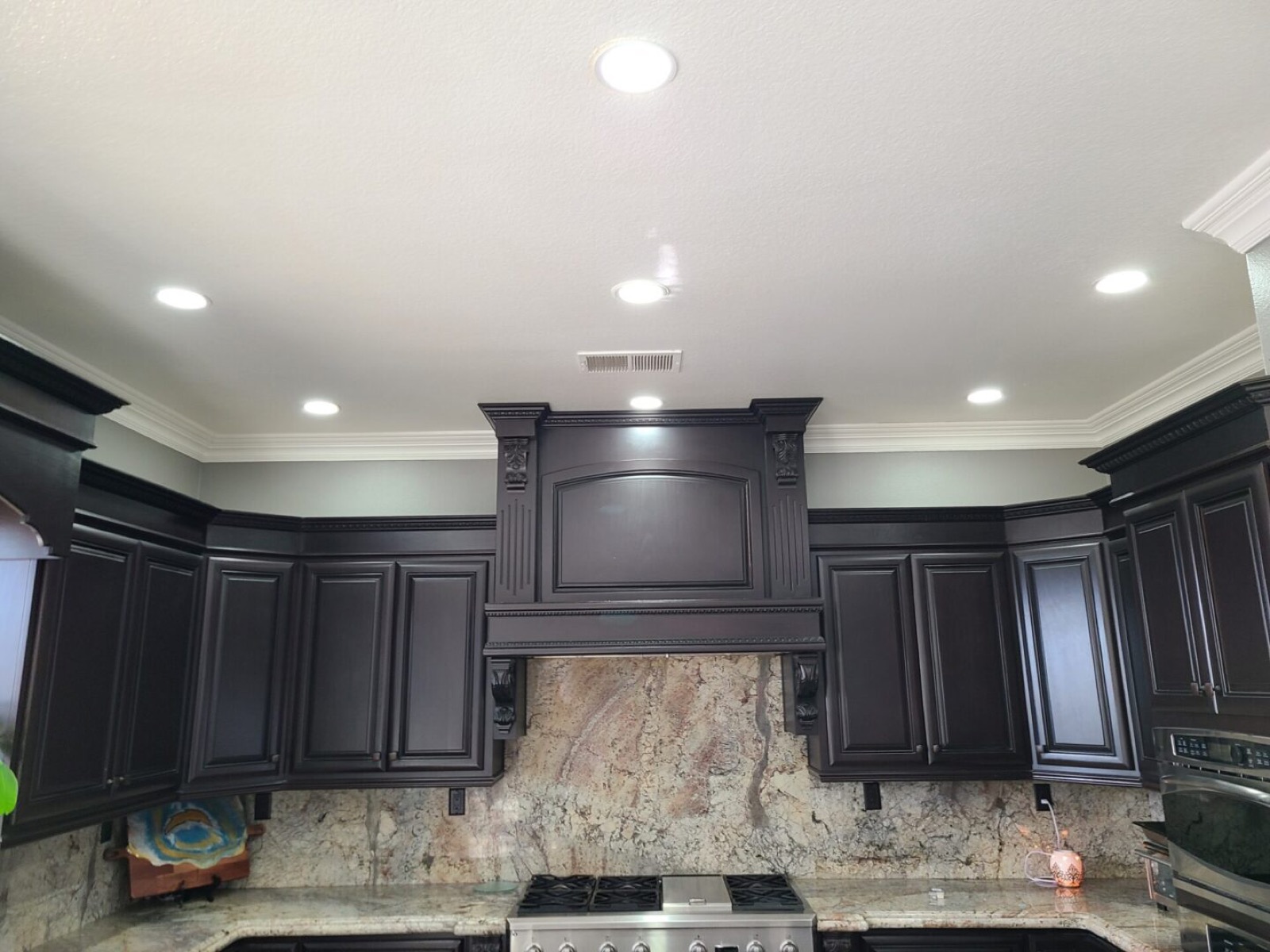
The cabinets are a separate decision, and you should make it on purpose. Dark stained boxes and a carved hood under a fresh white ceiling, like the kitchen at the top of this page, can look finished and handsome with the wood left alone. If the finish is worn through at the pulls, or the color dates the whole room, painting them is its own job: doors and drawers come off and get sprayed flat, and the boxes are done in place.
Kitchen walls also take more wear than any other room in the house. Steam, grease near the range, and hands by the light switch all call for a finish you can wipe down. So we talk sheen in the kitchen specifically: a satin or semi-gloss that cleans up well, rolled at full thickness so the first good scrubbing does not wear through to the old color.
Some owners want the grain to keep showing. For that, staining or refinishing usually suits the wood better than paint, and on the walk-through we will tell you which of those your cabinets can actually take.
Afternoon sun changes the color you picked
Corona gets hard western sun, and in a room with big west-facing windows that late light comes in low and warm. A cool gray can drift toward beige for a couple of hours. A soft white can look yellow on the wall that faces the glass and a little blue on the wall beside it. That is the room at work, and it is the reason we look at your samples in the late afternoon before anybody orders paint.
Direct sun slowly bleaches an interior wall too, and a thin film gives up its color first.
A thin film is exactly what the owner walked away from at his old employer, so every wall in your house gets the manufacturer specified amount of paint, the sunny one included.
Where a dark accent wall earns its place
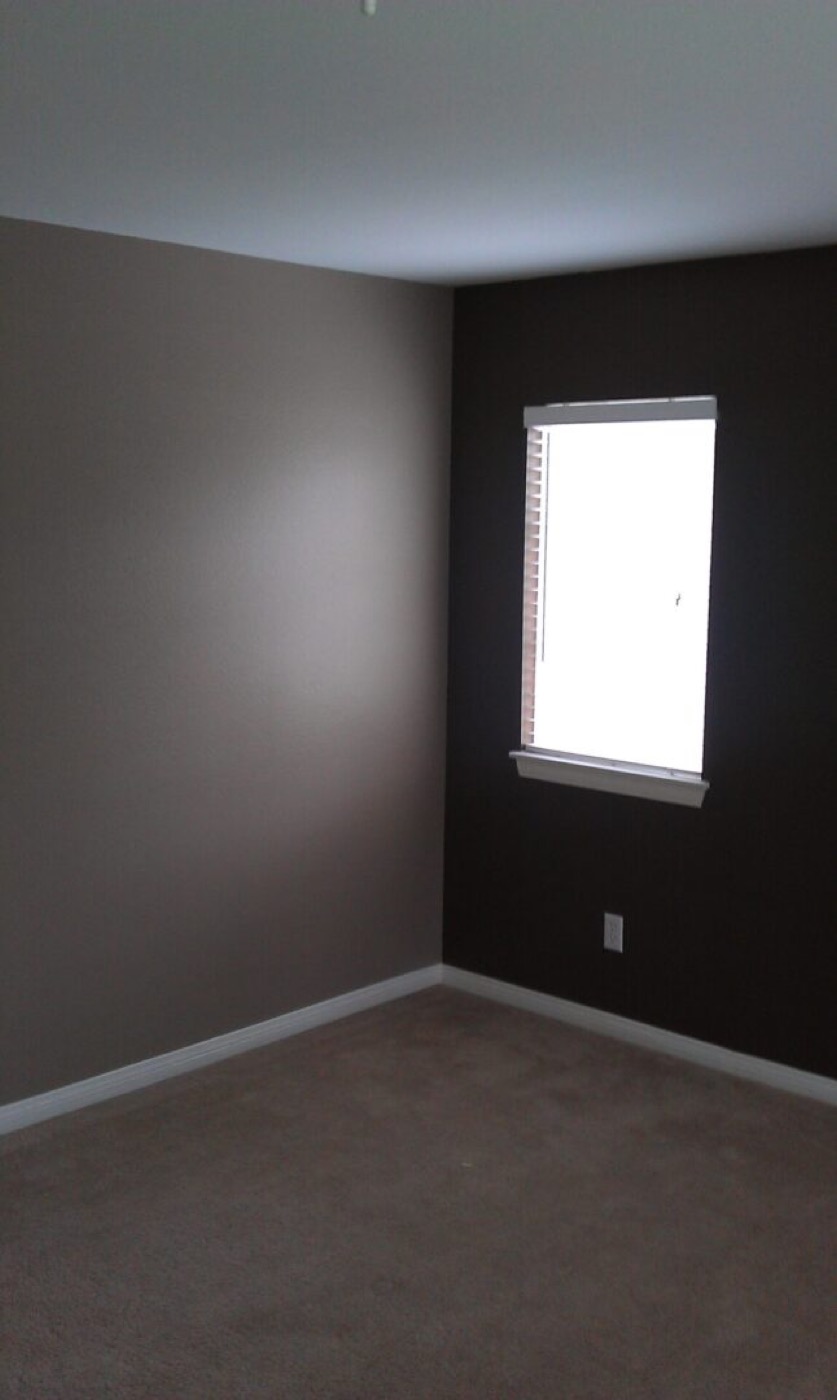
A dark wall seems to move toward you. That is the whole effect, and it is why placement matters more than the exact color. The wall behind a bed, the wall a sofa faces, or the short end of a long room usually work, because each one gives the eye a place to rest. A wall with a window in it can work as well, as long as you pick it knowing the glass becomes a bright frame against the dark color.
Deep colors are harder to put on well. They need more coats to look even, they show roller marks the moment an edge dries, and the cut line against a light ceiling has nowhere to hide. We cut those lines with care, roll the full height of the wall in one direction, and keep coating until the wall looks solid under a flashlight held flat against it.
Unsure? Paint one wall first. It is a small job with the same prep, and it will tell you more than any paint chip taped to the drywall.
Rooms and surfaces people add once we are inside
Once the drop cloths are down, these are the requests we hear next:
- Ceiling Painting
- Trim Painting
- Kitchen Cabinet Painting
- Cabinet Staining
- Accent Wall Painting
- Drywall Repair
Outside the same Corona house
Same crew and the same full-coat rule, on the exterior and the yard:
What Corona owners ask before the ladders come in
Can you paint a stairwell without marking the steps and railing?
Yes. Ladders go up with padded feet, planks run across the treads where the stairs call for them, and the handrail and balusters are wrapped before any paint is opened. The nosing of each step gets a taped drop cloth, since drips fall there first, and everything is unwrapped and checked at the end.
Should an open floor plan be painted all one color?
Often, yes. Without an inside corner or a change in the wall plane, a second color has nowhere clean to stop. Where a real corner exists, two colors can work well. We brush samples onto the darkest and brightest walls so you can judge the color in both before deciding.
Do you paint the kitchen cabinets too, or only the walls?
Both. Walls around cabinets are masked and brushed in the tight strips above the counters. Painting the cabinets themselves is a separate job where the doors and drawers come off and get sprayed flat. If you would rather keep the wood showing, staining or refinishing may suit it better.
How many coats does a dark accent wall need?
As many as it takes to look solid when light rakes across it, and deep colors usually need more than pale ones. We cut the ceiling and corner lines with care, roll the full height so no lap marks dry in, and never call a dark wall done while it still looks patchy.
Why does my new paint look like a different color in the afternoon?
Low western sun is warm light, so it pushes cool colors toward beige and can make a white look yellow on the wall facing the window. The paint itself has not changed. That is why we check samples late in the day, before the paint for the whole house is ordered.
Is interior work covered by a warranty?
It is. We stand behind our workmanship and the materials we use, with a standard warranty of 4 years from the date of completion. Before the crew packs up, you walk every room with the foreman, and anything that bothers you gets fixed before a ladder leaves the house.
Which room would you start with?
Maybe it is the stair wall with the wandering line, or the living room that turns a new color every afternoon. Call or send a note and we will come walk it with you. You get a price at that visit, figured from the actual wall area, with full coats of good paint behind it. C-33 licensed, insured, and fifty years on the brush.
Get a Ballpark