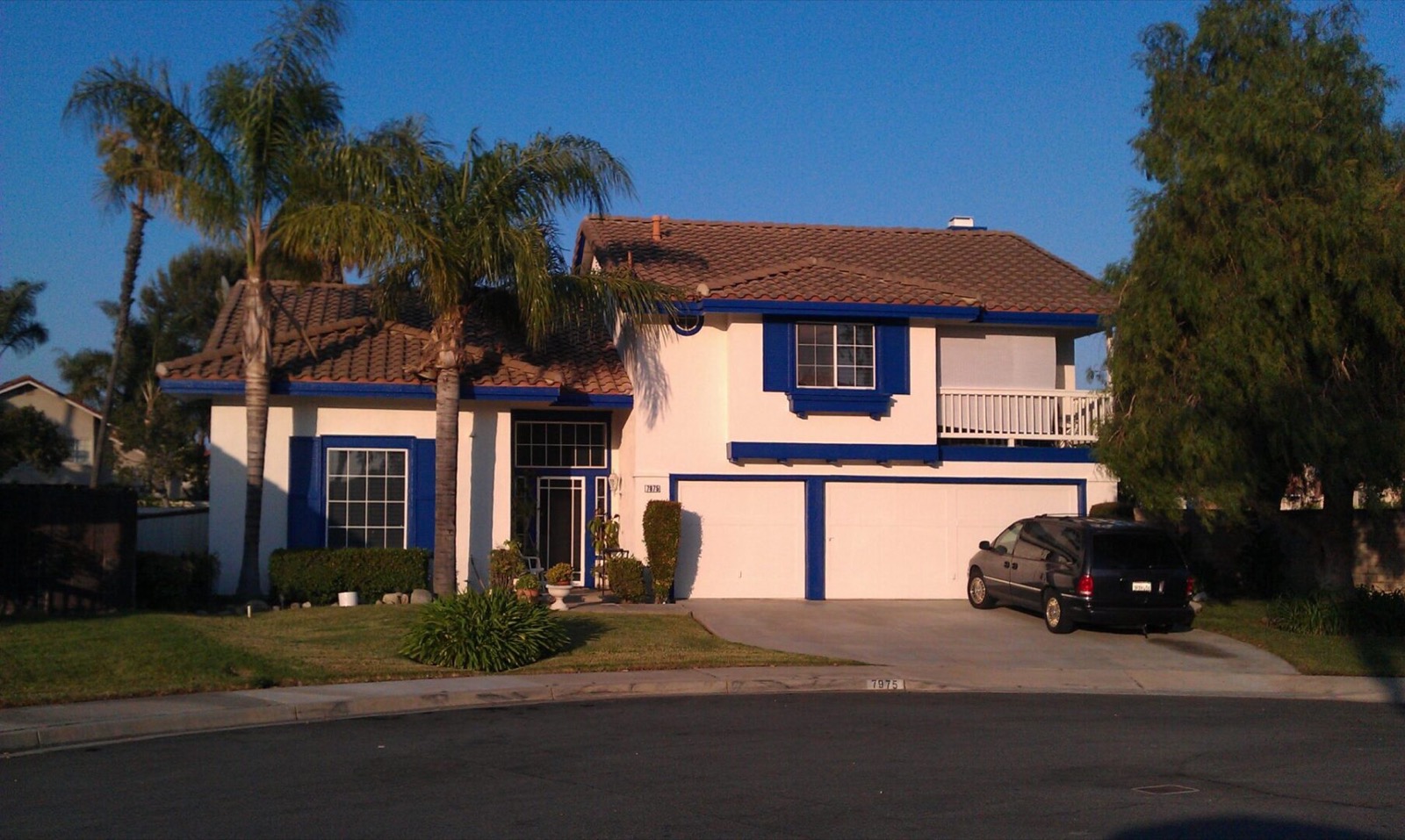
A Corona repaint with full coats all the way up the high walls
The first thing we do on a Corona exterior is walk around to the side of the house that faces west and look up. That wall tells us more about the last paint job than anything by the front door. If it has gone pale and dusty while the garage side still looks decent, somebody saved paint on the wall they figured you would never study. See houses we have finished, then ask us for a ballpark.
☎ (951) 685-1595Two kinds of Corona house, two different jobs
As far as a painter is concerned, most of Corona comes down to two houses. The 1970s ranch homes near the downtown grid sit low and spread out, and they carry a lot of wood: fascia boards running the whole roofline, open eaves, sometimes wood trim around the windows and an old wood garage door. Painting one of those is mostly wood work. Old fascia gets scraped, soft board ends get found and dealt with, and bare wood gets primer before any finish touches it.
The big stucco two-stories from the 1990s and 2000s in Sierra del Oro and South Corona are a different animal. The wood shrinks down to a few pieces. What you get instead is tall stucco fields, trim bands wrapped around the windows, and a lot of square footage on every side, much of it well out of reach from the ground. Those jobs are about coverage and access, and the gallons add up fast.
We measure the actual house and walk every side of it, so the number reflects the wood you have and the wall you have. The crews already run through Sierra del Oro, Dos Lagos, South Corona and the older streets near downtown, so getting eyes on yours is an easy stop.
Second-story walls are where paint goes missing
Setting up to work safely at height
Ladders and staging get set side by side with the ground each wall actually has: slopes, planters, side yards so narrow you can touch both walls. A painter who feels shaky on a ladder hurries, and hurried coats go on thin. We take the setup time so no one on our crew is rushing twenty rungs up.
Gables and walls above the garage roof
The peak of a two-story gable, the wall above the garage roof, the strip under the eaves out back. A homeowner will not see those up close for years, which makes them exactly where a crew cutting corners saves a gallon. They get the same film thickness as the wall beside your front door.
Spray on the big fields, brush on the wood
On tall stucco we usually spray for even coverage and follow with a roller so paint gets pushed down into the texture. Smooth wood trim at height gets brush and roller work, since spray mist drifts once the wind comes up the hill and lands where it should not.
Checking our own work before the staging comes down
The foreman looks over each high wall in slanted light for thin spots and misses. Fixing one takes ten minutes while the ladder is still standing. Once the ladder is back on the truck, a miss on a second story tends to stay there for good, and we will not leave that on your house.
Wind days, grit, and a crisp line on bold trim
Canyon wind is a real part of scheduling on a hillside house. Wind carries grit, and grit lands in wet paint and stays there. It also carries spray mist farther than anybody wants, onto cars, windows and the neighbor’s wall. On gusty days we switch from the sprayer to brushes and rollers, move to the sheltered side of the house, or call it for the day. Masking gets pressed down harder and checked more often, because plastic that flaps loose in a gust leaves a mark you cannot take back.
Trim is where plenty of homeowners make a strong choice, like deep blue around white stucco. It looks sharp, and it forgives nothing. Every wobble in a cut line and every spot where trim color strayed onto the stucco shows from across the street. We cut those lines by hand, look at them in daylight, and touch up the body color wherever the edge needs it.
Sheen on trim versus the body
Body walls usually get a flat or low-sheen finish that hides texture and small flaws. Trim, fascia and doors get satin or semi-gloss, which stands up to hands and hoses and wipes clean. That difference in sheen helps the trim read crisp. It also shows drips and brush marks more, so trim gets its own coats after the body is finished and dry.
The sun-side rescue, and what we check first
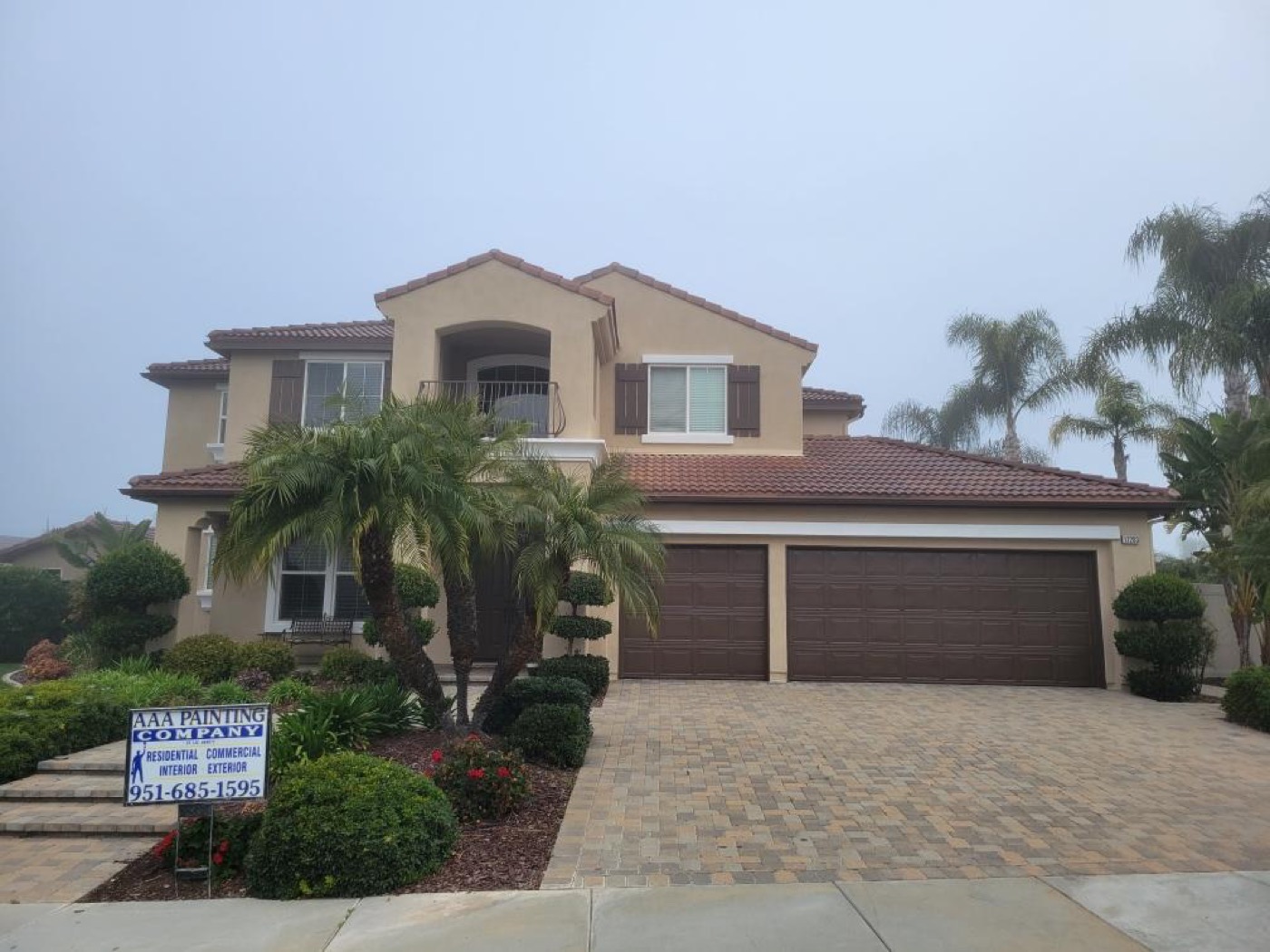
A good share of our Corona calls are houses where the last repaint is giving out on the south and west faces while the rest of the place still looks acceptable. The hillside homes catch canyon wind and hard western sun, and the two together will find every spot where a coating went on thin.
So on a rescue, the walkthrough starts on those walls. We rub a dark rag across the stucco and see how much color comes off on it. We study the top third of the wall, because a thin coat shows up high first, far from where the crew stood back to judge it. We check whether the trim paint is lifting at the edges or only faded, and whether the caulk at the window heads has split open. Then we go around to the shaded side and see what the same paint looks like when the sun is not grading it every afternoon.
This company started because the owner watched his old employer send crews out with about half the paint each job called for, and it never sat right with his conscience. Thin paint is the most common reason a sun side quits early, and it is the hardest thing for a homeowner to catch the day the truck pulls away. If the bid in your hand looks light for the size of the house, show it to us before you sign.
When the last coat is on
The job closes with a walk around the house beside the foreman, and you set the pace. We look at the high walls from the yard, the trim lines up close, and every place masking came off. Anything you point at gets fixed before the ladders go back on the truck. The paint trash leaves with us, the yard gets picked up, and whatever the crew moved goes back where it was.
What stands behind it
We back our workmanship and the materials with a standard warranty of 4 years from the date of completion. Trim takes the most abuse on any exterior, and most paint stores suggest repainting it every 4 years or so. We will tell you honestly when yours is due, well before it starts to peel.
Want the scope on paper before you decide anything? Ask us for a ballpark and we will list the coats, the prep and every surface we plan to touch.
Other outside work while the ladders are up
These pieces of the house get looked at on the same walkthrough, and doing them now saves a second setup:
- Fascia Painting
- Eaves Painting
- Soffit Painting
- Garage Door Painting
- Wrought Iron Painting
- Wood Rot Repair
More of our Corona work
The same crew and the same full coats, on the rest of the property:
Corona exterior questions from the walkthrough
Do the high walls get as many coats as the rest of the house?
Yes. Every wall gets the coats the scope calls for, measured against the spread rate on the product, including the gable over the garage and the back of the second story. Those high spots are where shortcut jobs fail first, so we check them from the ladder before the staging comes down.
What happens if the wind picks up in the middle of the job?
We change tools or change walls. Spraying stops once mist starts traveling, and the crew switches to brushes and rollers or moves to the sheltered side. If grit is blowing hard enough to land in wet paint, we stop for the day instead of sealing dirt into your finish.
My ranch house has a lot of old wood trim. Is that a problem?
No, it just changes the work. Older fascia and eaves need scraping, sanding at the edges and primer on any bare wood. Soft or rotted ends get flagged on the walkthrough, and we tell you plainly whether a board can be repaired or should be replaced before any paint goes on.
Will a bold trim color lose its punch on the west side?
Strong colors do lose depth faster in hard sun, and trim on a west face takes the worst of it. A quality exterior product at full thickness holds its color far longer than a thin coat. We talk through the product for your trim before ordering, especially on the sunniest walls.
Do I need to be home while you paint the outside?
No. We need access to the yard, a water spigot, and a plan for pets and sprinklers. Most homeowners check in at the start and end of the day. You do walk the finished house with the foreman before we call the job done, and anything you point out gets fixed.
Why is your number different from another bid I got?
Usually coats and prep. We price from measured footage, the spread rate on the product, and the prep your walls truly need. A lower number often assumes one coat, or quietly drops primer and caulk. Bring the other bid along and we will go line by line so you can compare fairly.
Stand in the side yard with us
Meet us out back, study the west wall together, and we will tell you what the house needs and what it can live without for a few more years. You get a ballpark at that visit, in plain words.
Get a Ballpark