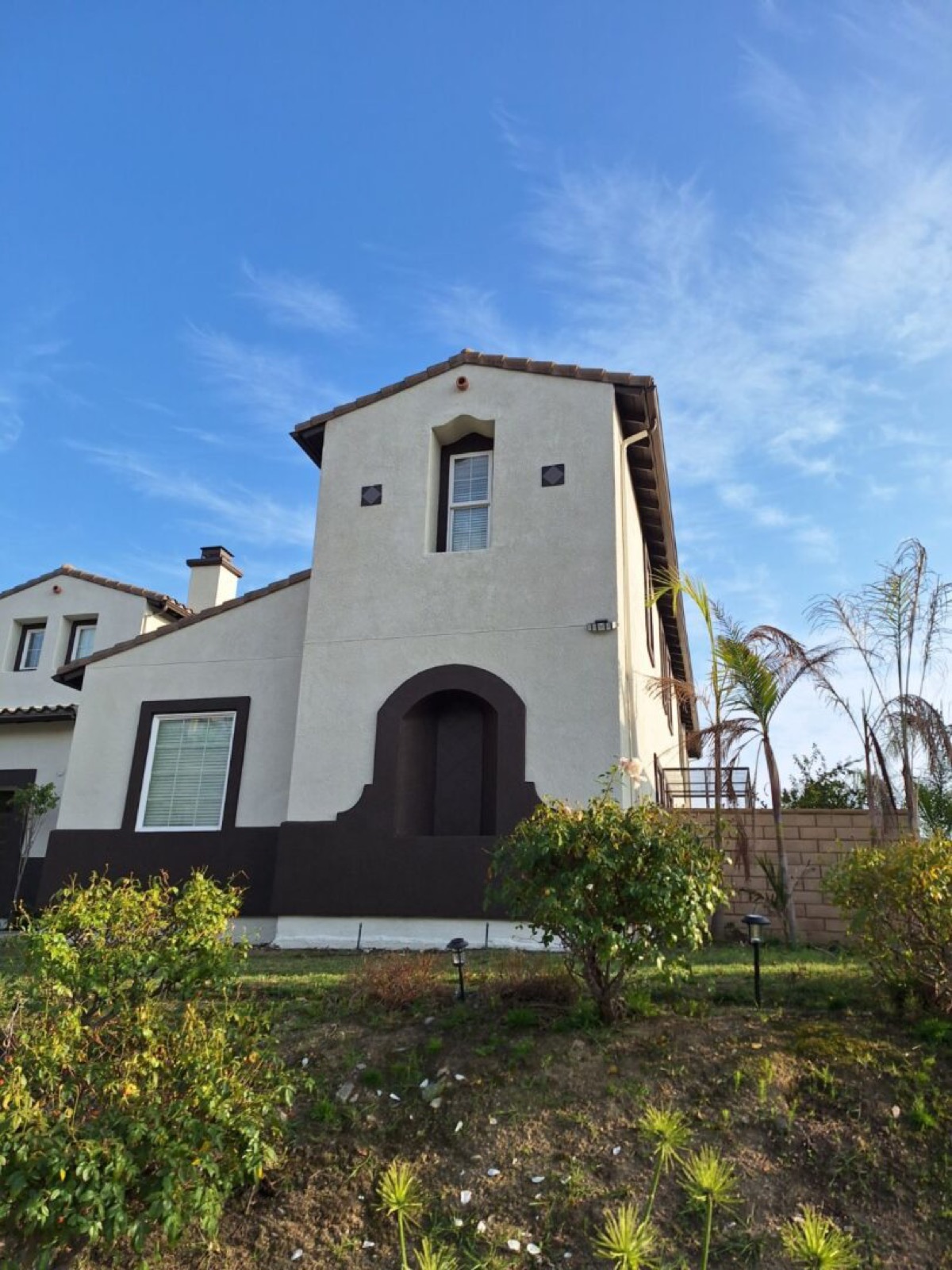
Stucco is a substrate before it is a color
Most stucco jobs that fail early did not fail because of the paint. They failed because of what was under it: a chalky surface nobody washed, a crack nobody opened, or a wall that was too hot when the coating went on. Finished stucco work is in the gallery, and a ballpark is one call away.
☎ (951) 685-1595What you are actually painting
Stucco is cement over lath over a weather barrier. It is porous, it is alkaline, and it moves. It absorbs coating unevenly depending on how it was floated and how old it is, which is why a gallon covers less on stucco than the same gallon covers on siding, and why a bid priced as though stucco behaves like drywall is a bid that runs out of material at the last elevation.
It also breathes. Water vapor moves through a stucco wall in both directions, and a coating that seals it too tightly on the outside can trap moisture inside the wall assembly.
Out toward Orangecrest the stucco two-stories are newer and mostly in good shape, needing color and crack attention. Closer to the older parts of town you find stucco applied over earlier substrates, patched by three different people across four decades, where the surface tells a story you have to read before you price it.
Reading a crack before deciding what to do with it
Hairline and spidered
Thin, shallow, often webbed across a field or radiating from a window corner. This is stucco doing what cement does as it cures and as the house heats and cools. It is cosmetic. Hairline cracks get elastomeric attention, filled and bridged so they do not telegraph back through the finish within a season.
Wide, straight, and still moving
A crack you can get a fingernail into, running in one direction, frequently stepping diagonally from a corner. That is the building moving, not the coating failing. Cracks get opened, filled with elastomeric or stucco patch as the crack demands, and textured to match. Painting over a moving crack is renting a finish, not buying one.
The ones that are not our call
If a crack is wide, growing, and paired with doors that stick or a visible offset in the wall plane, that is a structural conversation and we will tell you so plainly rather than sell you paint over it. We would rather lose the job than cover something that needs a different trade.
Texture matching, so the repair disappears
A perfectly sound patch that reads as a patch is still a failure to the person who has to look at it. Dash, lace, sand, smooth: we match the surrounding float before any coating goes near it. Get this wrong and paint makes it worse, because a uniform color makes the texture difference more obvious, not less.
Elastomeric or standard, and how we decide
Elastomeric is a thick, flexible, high-build coating. It stretches, so it can bridge hairline cracking and keep bridging it while the wall moves through the daily temperature swing. On a stucco house with widespread fine cracking and good drainage, it is the right answer and it is not close.
It is also the wrong answer in a few situations, and any painter who reaches for it every time is selling a product rather than solving a wall. It goes on heavy, which means a house that already carries several old coats may not want another thick one. It resists vapor movement, so on a wall with a moisture source behind it, elastomeric can hold water in rather than keeping it out. And on a smooth or lightly textured stucco it can visually flatten the surface in a way some owners dislike once it is up.
Standard exterior acrylic, applied at full film build over properly prepared stucco, is a genuinely excellent finish and the right call on plenty of Riverside houses. The honest version of this decision happens on the wall, with a hand on the surface, not in a brochure.
The thing we will always ask about
Where does water get on this wall. Sprinklers hitting stucco every morning, a downspout dumping at the base of an elevation, a planter holding wet soil against the wall. Those are the details that decide whether any coating lasts, and they cost nothing to fix compared to what they cost to ignore.
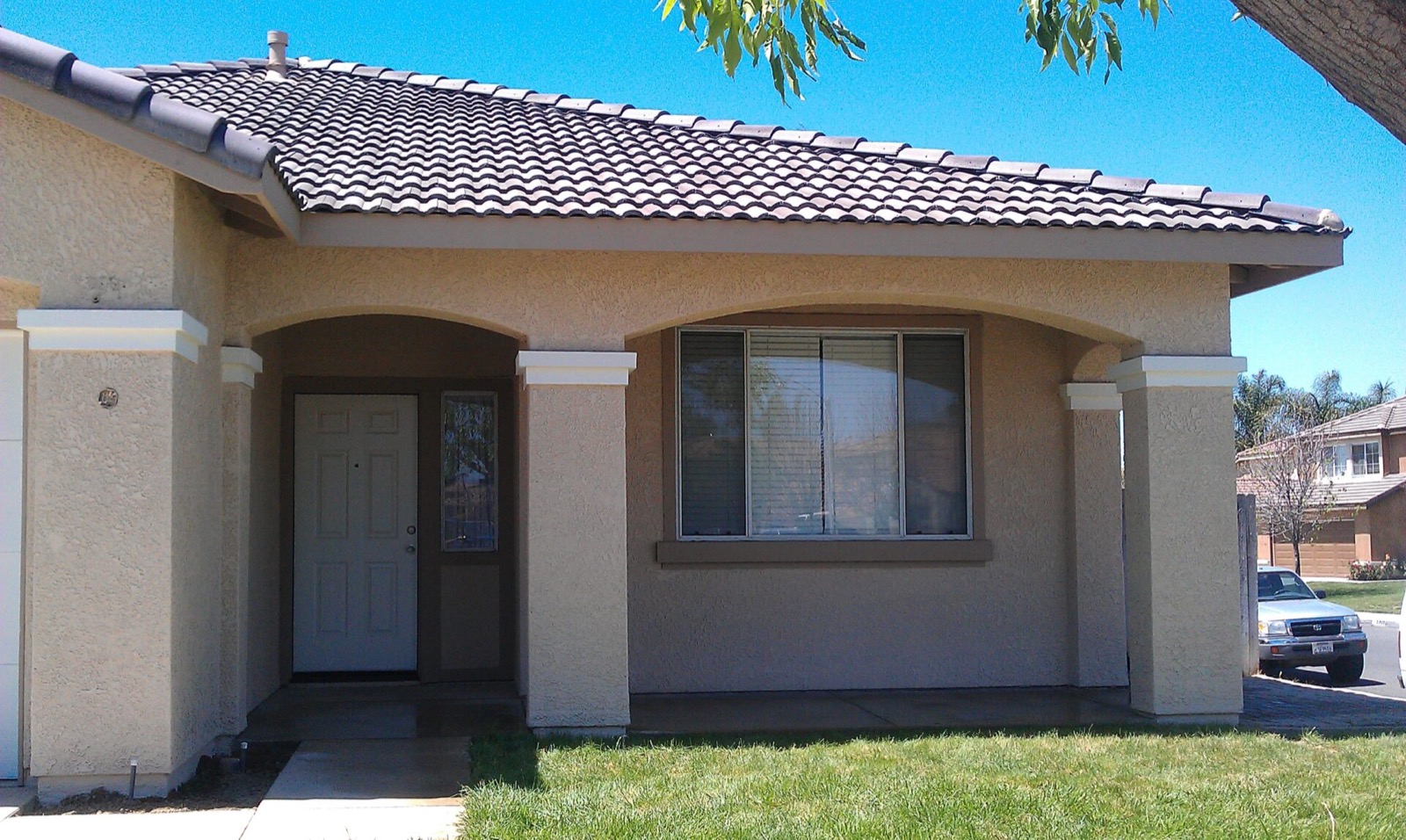
Painted over dirt, or painted on a hot wall
Two failures account for most of the early stucco jobs we get called to redo. The first is coating applied over a chalky, dusty, or sprinkler-filmed surface. The bond forms to the contamination instead of the wall, and within a couple of summers it releases in sheets, usually starting at the sunniest elevation.
The second is coating applied to stucco that was too hot. A west wall in direct summer sun runs far above air temperature, and cement holds that heat. Paint hitting it flashes off before it can wet into the pores of the stucco, so what looks like a finished wall is a film sitting on top of a surface it never actually grabbed.
Both are invisible on the day the crew loads out. Both are a full repaint three years early. This is exactly the arithmetic that put this company in business: the owner watched an employer stretch material and hurry surfaces, job after job, and could not square it with his conscience. On your stucco we use the manufacturer specified amount of paint on all surfaces, and we wait for the wall to be ready. If you have a bid that seems light for the square footage, send it over and we will read it with you.
What usually rides along with stucco work
The prep side of a stucco job overlaps with several of these, so they get quoted together more often than not:
The rest of our Riverside work
Same crew, same standard, on the rest of the house:
What the visit looks like
We walk the whole perimeter and put a hand on the wall. Chalk transfers to skin, so we find out in about four seconds what a lot of bids never check. We look at crack patterns by elevation, at the caulk around every opening, at where the sprinklers land, and at what previous coatings are already stacked on the surface. Then a price is given at that appointment.
Repairs come before color
Yes, and we would rather fix them than paint over them. Drywall, stucco cracks, wood rot, caulking, texture matching. Prep and repair are about half the hours on a typical job, which is exactly why the finish holds. On stucco specifically, patching and its cure time are the part of the schedule that cannot be compressed to suit a calendar.
Then the finish
Where spraying is the better call it involves more masking, and it applies more and thicker paint than rolling, but it gives the cleanest and straightest lines. On heavily textured stucco we back-roll behind the spray so the coating is worked into the low spots rather than bridging over them. The jobsite is cleaned up at the end of each day.
We firmly stand behind our workmanship and the materials we use, with a standard warranty of 4 years from the date of completion. Nothing is required from you but your name, address and phone number. Want it in writing? Ask for a ballpark.
Questions we get about stucco
Can you just paint over the cracks?
No. Cracks get opened, filled with elastomeric or stucco patch as the crack demands, and textured to match. Then paint. Painting over cracks is renting a finish, not buying one.
Do I need elastomeric, or is regular paint fine?
It depends on the wall. Widespread hairline cracking with good drainage is exactly what elastomeric is for. But it goes on heavy and it resists vapor movement, so on a house already carrying several thick coats, or one with a moisture source behind the wall, standard acrylic at full film build is the better call.
Will the patch be visible after you paint?
Not if the texture is matched before any coating goes on. Dash, lace, sand, and smooth all take different tools and a different hand. Uniform color actually makes a texture mismatch more obvious, so matching the float is the step that decides whether a repair disappears.
Why did my last stucco paint job fail so fast?
Usually one of two things. It went on over a chalky or dusty surface, so it bonded to contamination rather than the wall. Or it went on a wall that was too hot, so it flashed off before it could wet into the pores. Both look perfect on the final day and both fail years early.
Does stucco really need more paint than siding?
Yes. It is porous and textured, so the same square footage swallows measurably more material than a smooth surface does. That is why we quote from measured footage and the spread rate on the can, and why a bid that treats stucco like drywall runs short before the last elevation.
What if the crack turns out to be structural?
We tell you, and we do not paint over it. Wide cracks that are growing, especially alongside sticking doors or a visible offset in the wall plane, belong to a different trade. We would rather lose a job than put a finish over something that needs real repair.
Put a real number on it
Let us put a hand on your stucco and tell you what it actually needs before anybody talks about color. The walkthrough happens quickly, and a price is given at that appointment.
Get a Ballpark