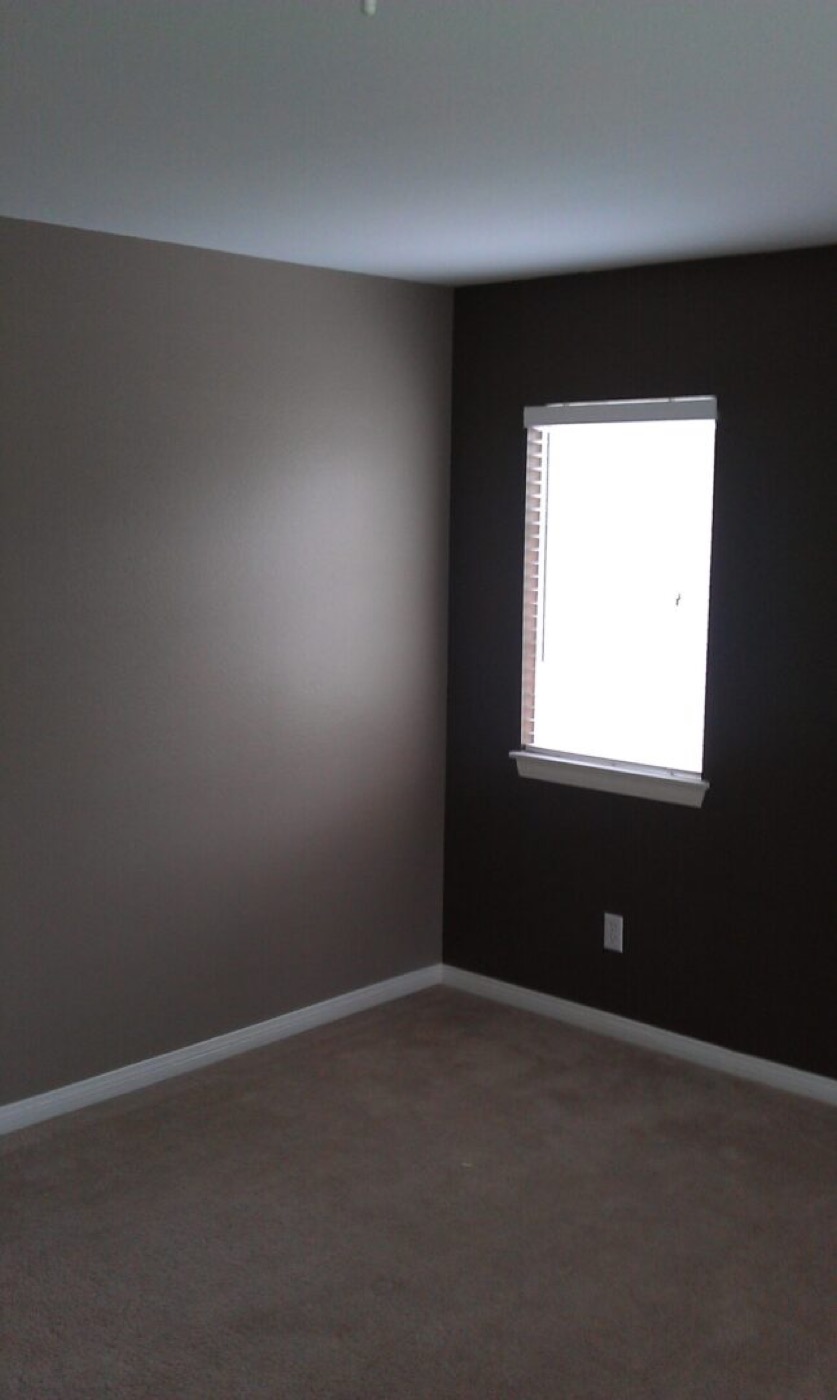
A dark accent wall that covers evenly, edge to edge
Most accent walls we paint in Moreno Valley begin with one question asked in the middle of the room: which wall? After that, the job comes down to discipline. A primer tinted toward the deep color, the full amount of paint the can calls for, and a ceiling line straight enough that nobody ever looks at it twice. Browse rooms we have finished, then ask for a ballpark on yours.
☎ (951) 685-1595Which wall should carry the color
People usually point at one of three walls. The one you face as you come through the door. The wall with the window in it. Or, in a bedroom, the wall behind the headboard. Each of them can work, and each comes with a catch you should hear about before the paint is bought.
The wall you see from the doorway gets looked at more than any other surface in the room, so it carries a strong color well. It also spotlights every seam and old patch in the drywall, because your eye lands there first. A window wall frames the view and softens glare, but it means cutting a clean line around the casing on all four sides. The headboard wall sits in gentler light for most of the day, which flatters a dark shade and is easy on whoever sleeps there.
When we stand in your room we will say what we see. Sometimes the wall you picked has a taped seam or a lumpy repair that a chocolate brown will turn into the main attraction, and the right first step is drywall work. Our accent wall painting follows the same order on every job: fix the surface, then color it.
Why a deep color punishes a thin coat
A primer tinted toward the finish
Deep colors are mixed into clear bases that have far less hiding power than a white base. Rolled straight over a pale wall, the old color ghosts through coat after coat. A primer tinted toward the final shade gives the topcoat something to sit on, so full coats at the spread rate on the label reach the real color instead of a stack of thin ones that never agree with each other.
The spread rate on the can
Every gallon tells you how much wall it is meant to cover. On a light color, a painter can stretch it and mostly get away with it, which is exactly why some do. On a navy or a deep brown there is nowhere to hide. Thin patches show as lighter clouds the moment sun comes across the room, so the manufacturer specified amount goes on every coat here.
The line where wall meets ceiling
Against a white ceiling, the cut line is the job. Textured ceilings make it harder because the bumps grab the brush. We cut it by hand and slowly, and when an old ceiling edge wanders, we set the line where it reads straight from the floor.
The inside corner
Where the accent color turns onto the lighter wall beside it, the line belongs exactly in the corner, with none of the brown creeping onto its neighbor. That corner is where a hurried job gives itself away in photos, and it is where our crew slows down most.
Sheen, scuffs and the white baseboard
Sheen matters more on a dark wall than on a pale one. Flat or matte hides the small waves every drywall job has and keeps a deep color looking rich, though it marks more easily when a chair back or a laundry basket rubs along it. Eggshell takes a wipe better and still keeps glare down. Go glossier than that and a dark wall starts to look like plastic in late light, with every roller lap showing.
Touch-ups are the other reason. On a deep shade, a dab of fresh paint over a scuff can flash, meaning it dries to a slightly different shine than the wall around it. The lower the sheen, the better a touch-up disappears. Keep the leftover paint from the same batch, sealed and labeled, so a future scuff has a true match waiting in the garage.
Then there is the trim. White baseboards under a chocolate wall look sharp and forgive nothing, since any brown on the top edge of the board shows from across the room. We tape and cut that line with the same care as the ceiling. If the baseboards are yellowed or chipped, painting them in the same visit is worth it, so the white reads as actually white. For a larger room, our wall painting runs on the same prep.
How a stretched accent wall gives itself away
Stand off to one side and look down the length of the wall toward the window. If somebody ran the paint thin, it shows. Roller stripes. Faint shadows of the old color. A corner a shade lighter than the middle. On a beige wall that might slide by. On deep brown or forest green it is the first thing a visitor notices.
John went into business for himself after watching an employer send crews out with paint cut to half the spec, over and over, and he could not square that with his conscience. That is still the line here. A full, blended coat at the amount the manufacturer calls for, and a slow walk along the finished wall with the foreman before anyone loads the truck. If a spot bothers you, it gets fixed right then.
Not sure the wall you have in mind is the right one? Have us look at the room at the hour you use it most, and we will tell you which wall carries a deep color best.
More of our Moreno Valley work
A finished accent wall tends to make the room next door look tired. These are the other jobs our Moreno Valley crew handles on the same route:
- Kitchen Cabinet Painting
- Garage Door Painting
- Shutter Painting
- Wood Refinishing
- All our Moreno Valley work
Before the color is chosen
Torn between two shades? A color consultation puts real samples on your actual wall. And if one wall turns into the whole bedroom, our bedroom painting handles walls, ceiling and trim together.
West light and living with a dark wall
A Moreno Valley room with west windows takes a hard, warm light in the afternoon. On an accent wall, that light can push a cool charcoal toward brown and turn a rich brown almost black by evening. One deep wall shows this more than four pale ones, because there is nothing next to it in the same color to average it out.
Test on the wall you picked
Put a swatch bigger than your hand right on the accent wall itself, near the corner and near the window. Look at it with your morning coffee and again late in the day. A chip held up against a different wall tells you very little about the one you are painting.
Starting with one wall is fine
Plenty of homeowners try us on a single wall first. The room still gets the full treatment: floors and furniture covered, switch plates off and back on once things are dry, holes filled and sanded, and the site cleaned before we leave each day. If you like it and want the hallway next, that is one more call.
One wall or a whole floor, our workmanship and materials carry a standard warranty of four years from completion. Book a walk-through and we will look at the wall together.
Accent wall questions, answered straight
Which wall should be the accent wall?
Usually the one your eye hits first when you walk in, the wall around a window, or the wall behind the bed. A wall without doors or awkward breaks works best, because the color reads as one clean panel. We will give you an honest opinion standing in the room with you.
Why does a dark color need a tinted primer?
Deep shades are mixed into clear bases that hide far less than white paint does. Without a primer tinted toward the finish, the old color keeps showing and you end up chasing it with extra thin coats. Tinted primer lets full coats at the spread rate on the label reach the true color evenly across the wall.
What sheen works best on a dark accent wall?
Matte or eggshell for most rooms. Lower sheens keep a deep color rich and let touch-ups blend, while glossier finishes show roller laps and flash wherever you patch. In a hallway or a kid’s room that takes a beating, eggshell is the safer pick because it wipes clean.
Will the dark color end up on my ceiling or the next wall?
Not if the cut line is done right. We cut the ceiling edge and the inside corner by hand, slowly, and check both from across the room before the crew leaves. When an old textured ceiling has a wavy edge, we set the line where it looks straight from the floor.
Can you paint just one wall instead of the whole room?
Yes, and plenty of jobs start exactly that way. One wall still gets real prep: floors covered, plates off, holes filled and sanded, and the full amount of paint the manufacturer calls for. If you like how it turns out, adding the next room is a short phone call.
Do I need to leave the house while you paint?
No. The water based paints we use dry quickly and smell far less than the old oil paints did. If anyone at home is sensitive to odor, mention it at the walk-through and we will plan the timing and the order of the work around them.
Show us the wall you have in mind
Point at it, tell us the color you keep coming back to, and we will say plainly what it takes, drywall repair included if it needs any. You get the price at that visit, while we are still standing in the room.
Get a Ballpark