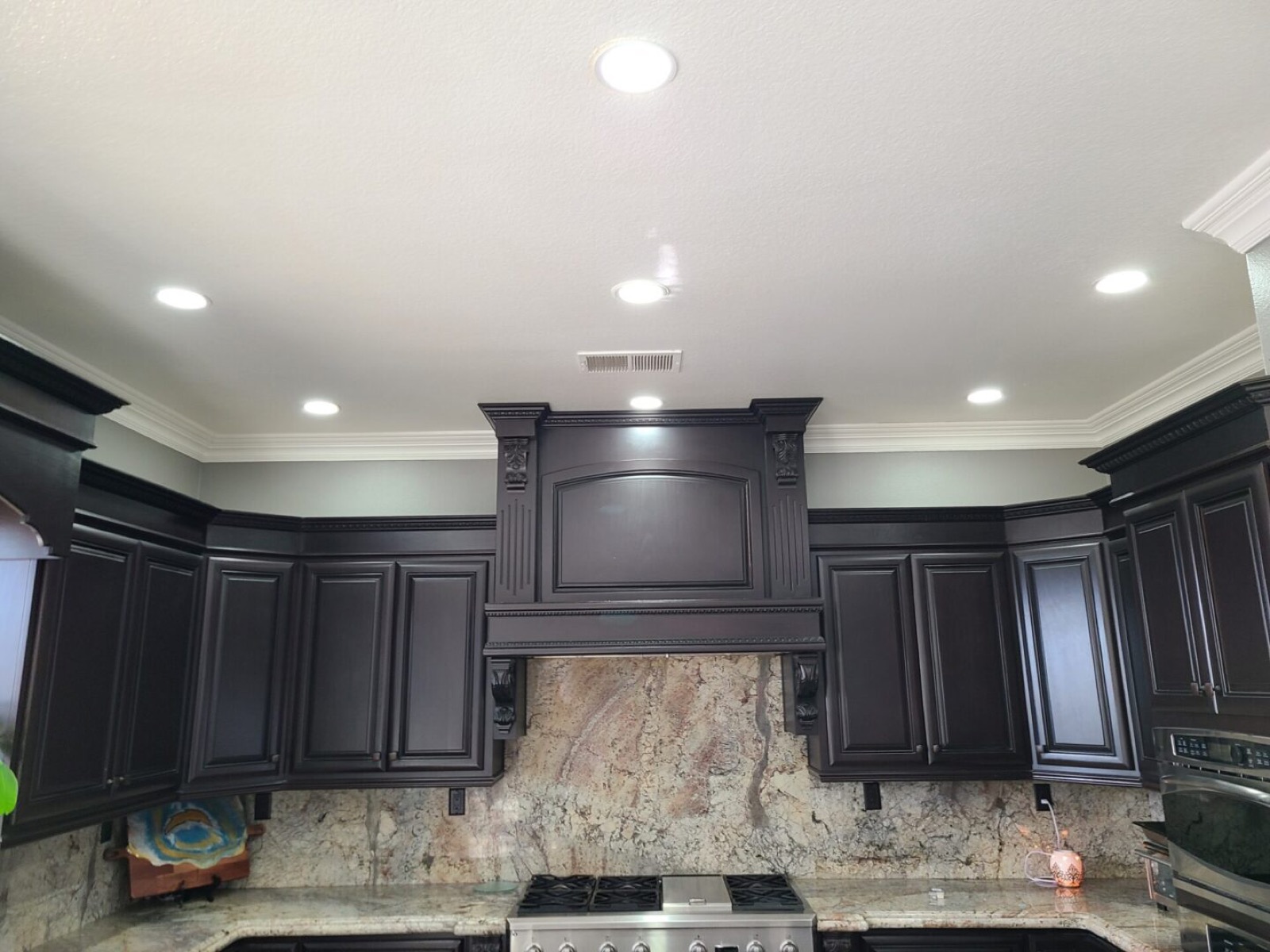
Moreno Valley’s builder-grade cabinets, painted to look factory-made
Most kitchens here came with the house: oak boxes the builder put in, or cabinets that left a factory already finished and have gone dull around every pull. We repaint them the way a factory would, doors off and sprayed flat, with a full coat reaching every edge. Look through jobs we have finished, then ask for a ballpark on your kitchen.
☎ (951) 685-1595What came with a Moreno Valley kitchen in the first place
Moreno Valley is mostly stucco tract housing built from the 1980s into the 2000s, and the kitchens were planned the same way the streets were. Open a cabinet in a tract kitchen here and you usually find one of two things. Either it is honey oak with an open grain, or it is a box that came finished from the factory with a hard, smooth coat.
Both are usually sound cabinets worth keeping. Neither one takes paint well straight off the truck. Oak has deep pores that print through a painted surface. A factory finish is so slick that fresh paint has almost nothing to hold onto. That is why prep on cabinets looks nothing like prep on a bedroom wall, and why we run cabinet work as its own trade with its own setup.
Our kitchen cabinet painting work runs the same everywhere we go. What changes in Moreno Valley is what we find behind the doors, and on most of these houses it is one of the two cabinets above, now decades into a life of steam, grease and hands.
Four stops between a dated door and a sprayed one
Off, numbered, and bagged
Every door and drawer front comes off and gets a number that matches its opening. Hinges and pulls go into bags labeled by location, so the right hinge returns to the right door. Nothing gets mixed up on the day we put it back together, and nothing ends up lost in a coffee can.
Degloss, then a bonding primer
A factory finish gets cleaned of years of cooking residue and scuffed until the shine is gone. Then a bonding primer goes on, a product made to grip hard, glossy surfaces. Leave out either step and the paint lifts off the door edges in strips the first time a dish towel catches on it.
Sprayed flat, under control
Doors and drawer fronts lie flat and get sprayed, so the paint levels out without runs and leaves the smooth face people expect from a factory cabinet. Lying flat also means each face holds a full, even coat, where a door painted standing up only keeps what will cling to it.
Boxes masked and finished where they hang
The cabinet boxes stay on the wall. We cover counters, backsplash, appliances and floor, then prime and paint the face frames and end panels in place. Once everything has dried, the doors go back on their own hinges and get adjusted until the gaps run even down the whole row.
Oak grain, and deciding whether you want to see it
Paint a builder oak door without dealing with the grain and you get a solid color with a texture of tiny trenches running through it. A few owners like that look; it reads honest and a little rustic. Most people who ask us for painted cabinets picture a smooth face, and getting there takes one more step on every door.
Filling the grain
Grain filler gets worked into the open pores and sanded flat before any primer goes down. It adds hours to the job, and it is the difference between a cabinet that looks painted and one that looks like it was bought that way. At the walk-through we show you a sample door done both ways, so you are choosing from something you can touch.
When stain is the better answer
If the oak is in good condition and what really bothers you is the orange cast, going darker with stain keeps the wood visible and still changes the feel of the room. That is cabinet staining, a different job with different prep, and for a kitchen with good bones it is sometimes the right call.
Painted or stained, the work and the materials carry our standard warranty of 4 years from the date of completion.
How long the kitchen is out of commission
Every painted cabinet runs on two clocks. Dry means you can touch it without leaving a print. Cured means the film has hardened all the way through and can stand up to a pot lid, a wet sponge, and a kid swinging on a drawer front. Paint is dry well before it is cured, and treating the first like the second is how a fresh door gets scuffed in its first week.
Since the doors are finished away from the kitchen, the boxes are the only part that keeps you from using the room. We order the work so the counters and sink come back into service as soon as the product allows. Real timing depends on the coating and the weather, so we give you the honest number for your product at the walk-through.
The first stretch after the doors go back up
Go easy for a while. Close doors by the edge instead of letting them slam, hold off on sticking felt bumpers to fresh paint, and wipe spills with a soft cloth. The finish keeps hardening for some time after it already looks done. Pulls go back on last, straight out of their labeled bags, into the holes they came out of.
Where a thin cabinet job gives itself away
You see it on the edges first. The square edge of a door and the lip of a drawer front hold less paint than the flat face even on a careful job, so when a painter stretches the material those edges wear through to primer, and then to oak. The next giveaway is the zone around the pulls, where hands, rings and kitchen grease hit the same spot dozens of times a day.
A cabinet door is a small surface, and that makes a short coat tempting. Every door we touch still gets the manufacturer specified amount. John went out on his own after watching a former employer put on about half the paint each job called for, and it never sat right with his conscience. Thin paint on a living room wall takes years to show. On a cabinet door it shows much sooner, because nothing else in a house gets handled that often.
If someone has already handed you a number for your kitchen and it seems light, send it our way and we will tell you plainly what it leaves out.
Other cabinet and wood work worth a look
When the kitchen is one piece of a bigger plan for the house:
More of our Moreno Valley work
The same full coats, in other rooms and out front:
Cabinet questions from Moreno Valley kitchens
Can you paint cabinets that came with a factory finish?
Yes, and most tract kitchens here have exactly that. The surface gets cleaned of grease, scuffed until the sheen is gone, and coated with a bonding primer made for slick finishes. Skip that and the new paint has almost nothing to grip, so it chips at the edges early.
Will the oak grain show through the paint?
It will unless we fill it. Builder oak has open pores that read as fine grooves under a solid color. Grain filler, sanded flat before primer, gives you a smooth face. Some owners like the texture, so we bring sample doors done both ways and you choose.
Do you paint the doors right in my kitchen?
No. Doors and drawer fronts come off, get numbered, and are sprayed flat in controlled conditions, which is how you get a factory-smooth face. The boxes stay on the wall and are masked and painted in place, then the doors go back on the hinges they came off.
How long until I can use my kitchen normally?
Sooner than most people expect for light use, and longer than they expect for hard use. Paint dries to the touch well before it cures through, and it keeps hardening after it looks finished. We give you the real timing for the product on your doors at the walk-through.
Should I paint my oak cabinets or stain them darker?
If the oak is sound and what bothers you is the orange tone, a darker stain can keep the grain visible and still change the whole room. If you want a solid color or a clean modern look, paint is the answer. Bring both questions to the walk-through.
What happens to my hinges and pulls?
They come off with the doors and go into bags labeled by cabinet, so every piece goes back where it started. If you are switching to new pulls, tell us before we start, since filling old holes and drilling new ones is easier while the doors lie flat.
Open a few doors with us
Show us the worn edges, tell us what you want the room to feel like, and we will bring sample doors so you can weigh paint against stain on the spot. The walk-through is short, and you leave it holding a price for the whole kitchen.
Book a walk-through