November 2026
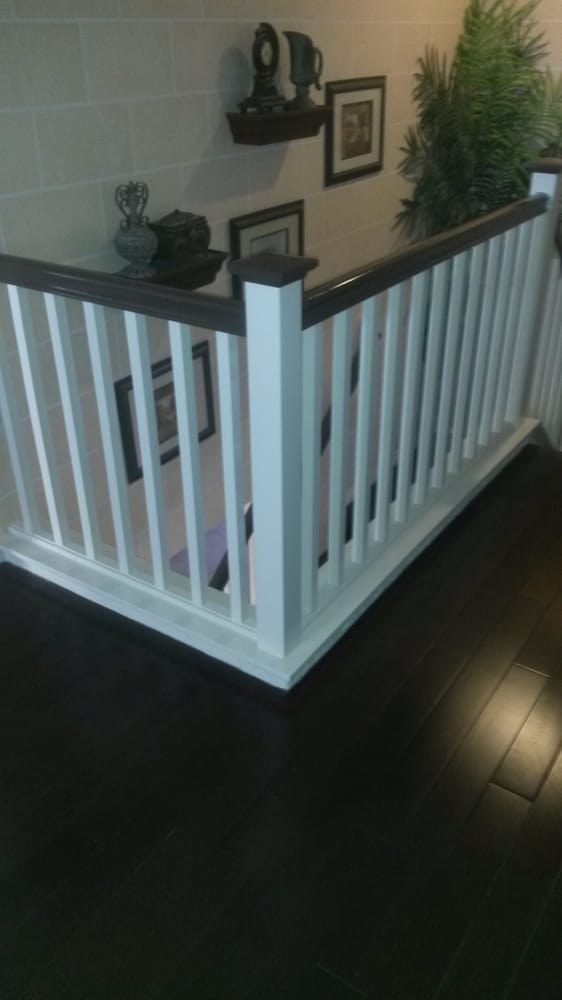
Walk into a lot of newer two-story homes in Perris and the staircase looks about the same: white balusters, a white skirt board running up the side, and a dark handrail with dark treads. It is a good look, and builders use it for a reason. A few years in, though, the two halves of that staircase start aging at very different speeds.
The white parts collect scuffs and vacuum dings. The dark rail goes dull, then sticky, then pale in a band right where everybody grabs it. Owners usually notice the rail first and wonder whether the whole staircase needs to be redone. Often it does not.
Why Builders Split the Stairs Into Light and Dark
The split is practical before it is pretty. The handrail and treads are the parts that get touched and walked on, so they go dark, where skin oils, shoe marks and everyday grime hide better. The balusters, newel posts and skirt board are mostly vertical surfaces that collect dust and the odd bump, so they go white and look crisp.
Some stairs finish the dark parts in stain with a clear coat over it, so you still see wood grain. Others use a dark paint, which looks close from across the room and behaves very differently up close. It is worth knowing which one you have before anyone talks about refinishing, because the repair is completely different.
Here is a quick way to tell. Look closely at the top of the rail in good light. If you can see grain lines through a clear, slightly glossy layer, it is stain and clear coat. If the color sits on top as a solid film and you see brush marks instead of grain, it was painted. A worn spot gives it away too: stain wears to pale bare wood, while paint wears down to whatever primer or wood sits underneath it.
Your Hand Is the Hardest Thing on That Rail
Nothing in the house sees more contact than the stair rail. Every trip up and down, a hand slides along it, carrying lotion, cooking grease, sunscreen and plain skin oil. Rings and watch bands scratch it. Kids hang on the newel post at the bottom and swing around it. Over a few years, that contact wears through the clear coat in a strip along the top of the rail, heaviest at the turns and the newel caps.
The signs show up in a particular order. First the rail loses its sheen in a band. Then it feels slightly tacky on a warm afternoon, because the oils have built up in the worn finish. Then the wood under it starts to look gray or pale, sometimes with dark smudges where grime has worked into the bare grain.
The white balusters age on their own schedule. The lower ones on each step take hits from vacuum heads, toys, laundry baskets and shoes, so they chip on the bottom few inches and along the front corners. The upper ends mostly need cleaning. A staircase where both halves are tired at once is usually one that went a long time between visits.
How the rail gets cleaned speeds all of this up or slows it down. Furniture polish and oil soaps feel like they help, but they leave a slick film that builds up over the years, attracts dust, and has to be scrubbed off before any new finish will stick. A damp cloth with a little mild dish soap, then a dry cloth behind it, is all a finished rail needs. If yours has years of polish on it, tell us on the walk-through, because degreasing it becomes part of the prep.
Restain the Rail, or Paint It Dark
This is the real decision on most stair jobs, and there is no single right answer. Restaining keeps the wood look. To do it properly, the old finish has to come off down to clean wood so the new stain soaks in evenly, and on a rail with curves, easings and a goose neck at the landing, that is careful hand sanding. Then the stain, then a clear coat built up in full coats so it can stand up to hands for years.
Painting the rail a dark enamel is a different trade-off. It covers worn patches and old stain that sanding would struggle to even out, and later touch-ups are easier to blend. You lose the grain, and some people mind that and some never notice.
We will tell you honestly which way your rail leans. A rail in decent shape with a worn top band is often a good restain. A rail with deep gouges, mismatched patches, or old repairs in a different wood is usually happier painted. Either way, the parts your hands touch get the same full amount of finish the manufacturer calls for, because a thin clear coat on a handrail wears through fast.
The treads are their own question. Dark stained treads with a worn path down the middle are a floor finishing job as much as a painting one, and on a staircase the family uses all day, we talk through how to keep a route open while each step cures. Painted treads are possible but slippery unless the coating is made for floors, so we usually steer people toward leaving the treads alone or refinishing them as wood. If the treads are carpeted, that settles it, and we mask the carpet edge tight against every baluster.
Landing Rails and Half Walls Get Forgotten
The staircase people photograph is the run from the entry. The one that gets forgotten is the railing along the upstairs landing, the half wall with balusters and a cap that overlooks the room below. It gets the same hands, and it often gets something worse: laundry baskets set on the cap, kids leaning over it to talk downstairs, and a vacuum cord dragged along its base every week.
If you are refreshing the stairs, include the landing. A crisp new staircase with a scuffed landing rail right above it looks unfinished, and it is the first thing you see from the couch. The newel posts at each end of the landing tend to be the most chipped pieces in the house, since they are corners everything gets carried around.
The wall alongside the stairs belongs in the same conversation. It takes shoulder rubs and hand marks all the way up, and it is a tall reach over the steps. Our staircase painting work in Perris covers the rail, the balusters, the landing and that stairwell wall in one visit, so you are not living with ladders on the stairs twice.
Keep a Touch-Up Can That Actually Matches
Stairs take small hits forever, so plan for touch-ups from the day the job is done. Ask us for the leftover enamel from the balusters and the rail, labeled with the color, the sheen and the brand. A can of white with no label is close to useless, because there are hundreds of whites and they do not blend into each other.
Store it inside the house, not in the garage. A garage in Perris gets hot enough in summer to ruin water-based paint sitting on a shelf, and paint that has turned lumpy will never level out on a baluster.
When a chip shows up, clean the spot, scuff it lightly, and dab the paint on with a small artist brush, staying inside the chip. Painting a big swipe over a small ding is what makes touch-ups show, especially on enamel, where the sheen of a fresh patch flashes against the older finish around it. Small and careful beats fast every time.
Show Us the Worn Spot
Not sure whether the rail can be saved or should go dark? Call (951) 685-1595 or send us a note with a photo. When the crew is next working in Perris, someone will run a hand along it with you and give you a ballpark for the stairs and the landing together.