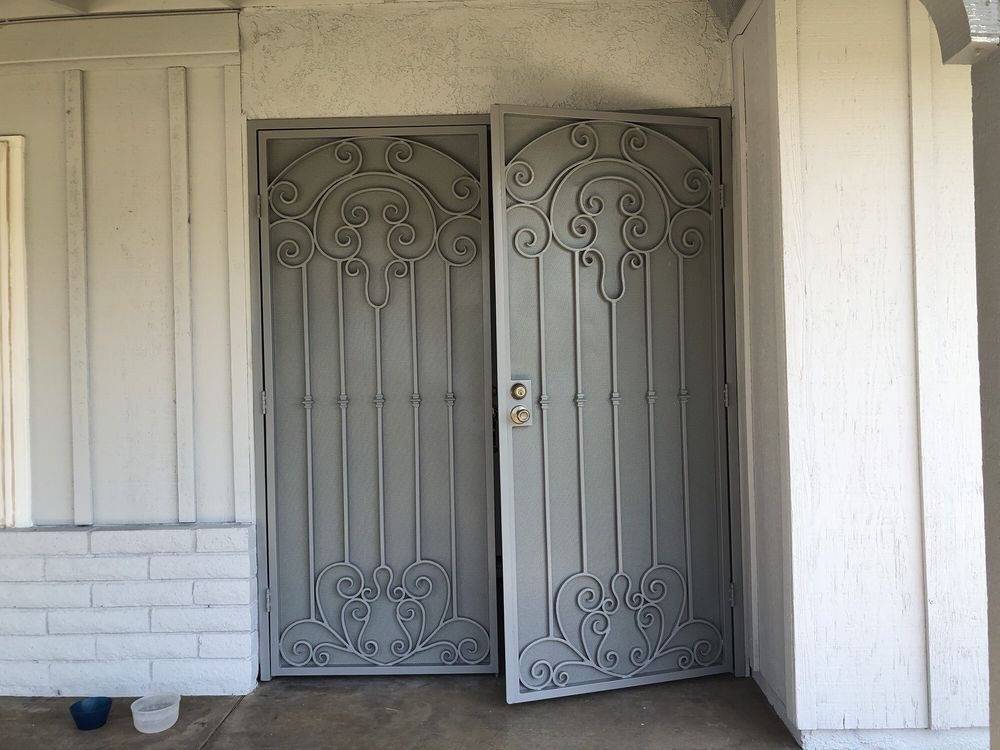
Iron gates and screen doors coated thick enough to keep rust down
Security screen doors, side gates and picket fences take the Perris sun and dust head on, and every chip in their paint is a place for rust to start. We brush and sand the rust away, prime the bare iron, then brush color into the scrollwork a sprayer skips. Doors and gates still latch when we leave. See finished work in the gallery, or send us a few details for a ballpark.
☎ (951) 685-1595Black, gray, or a match for the house trim
Most iron around here ends up black, and with good reason. Black reads clean against cream or tan stucco, hides the dust better than lighter shades, and makes a picket fence look crisp from the street. It also runs hotter in direct sun, so the product has to be one rated for exterior metal.
Gray softens a security door so it sits more quietly against a white or pale porch wall, and it shows less of the dust that collects in the scrolls. A third route is matching the iron to the trim on the house, which ties a gate or door into the front instead of making it stand apart. Our wrought iron painting service works through that same decision on every job.
Sheen on metal
A satin or semi-gloss finish sheds dust and wipes clean more easily than a flat one, and on rough, pitted iron it hides brush marks better than a high gloss does. We settle sheen and color together, out at the gate, with the house behind it.

Taking iron back to sound metal before any color
Brush and sand off the rust
Loose rust, flaking paint and scale come off with wire brushes and sandpaper, down to firm metal or to old paint that is still bonded tight. Painting over loose rust only buries it, and it keeps pushing the new coat off from underneath.
Clear out the sanding dust
Sanding leaves fine metal and paint powder in every corner of the scrollwork. It gets wiped and blown out, because primer laid over that powder grips the dust instead of the iron and lifts with it.
Prime every bare spot
Anywhere the brushing reached bare metal gets a rust-inhibiting primer before color goes on. Where rust has spread well past spot repairs, our rust prevention coatings are the better place to start.
Brush and mitt into the scrollwork
A sprayer covers flat pickets but misses the backs of curls and the insides of tight joints. We brush those and wrap round bars with a painting mitt, so every face of the iron ends up with a full coat, the inside of each scroll included.
How rust gets its start on Perris iron
Plenty of Perris homes carry iron somewhere out front: a security screen door at the entry, a gate across the side yard, a short picket fence along the lawn. On the older wood-sided houses downtown, that iron may have been painted over by several owners before you, each coat laid on top of whatever was failing underneath.
Iron only rusts where moisture reaches bare metal, and the flatland sun keeps opening those spots up. Paint on a dark gate runs hot, turns brittle, and starts cracking at the welds and the tight curls of the scrollwork. Dust works into those cracks and holds sprinkler water and the occasional rain right against the steel. The orange shows at the joints first, then creeps outward under the paint where you cannot see it yet.
John started this company because a former employer made a habit of using half the paint each house needed, and he wanted no part of it. Iron is where that kind of shortcut costs a homeowner fastest. A thin coat has gaps nobody can spot from the sidewalk, moisture finds them, and rust bleeds back through the new color long before the next repaint should be due. Our iron gets the full amount the manufacturer specifies, primer included.
Newer iron on the stucco tracts near May Ranch and Villages of Avalon usually needs less of a fight: a scuff, primer where the factory finish has chipped, and a full color coat. Older iron downtown tends to carry more layers and more hidden rust, so the brushing takes longer, and we say so on the walk-through rather than on the second day of the job.
Already holding a price from someone who plans to spray the whole gate in an afternoon? Pass it along through our contact page and we will point out which prep steps it skips.
Keeping drips off everything around the iron
Iron is almost always fastened to something you would rather not see painted black, and that part of the job gets planned before a brush is opened.
Stucco and porch walls behind a screen door
A security door sits close to the wall, and paint flicked off a brush lands on the stucco around its frame. We mask the wall and the porch floor first, and keep the brushwork off the jamb so the door still closes square.
Brick mow strips and lawn edges
A picket fence along a lawn often stands on a brick mow strip or a concrete curb. Paint that drips onto brick sinks into the pores and stays there for good. Drop cloths and tape go down along the whole run before the first post is touched.
Shrubs and beds growing through the pickets
Plants that grow through a fence get tied back gently or draped with breathable cloth, never sealed under plastic in afternoon heat. Overspray is the bigger danger to them, which is one more reason most of our iron work is done by brush.
The mesh inside a security door
Many security doors hold a fine screen mesh inside the iron frame. Paint on that mesh clogs the holes and never looks right again, so it gets masked from both sides, or lifted out when the frame allows it and set back in once the coat has hardened.
Hinges, latches and locks
Hardware comes off where it can and gets masked where it cannot. A latch painted shut or a hinge glued stiff turns a finished gate into a daily chore, so every door and gate gets opened, closed and locked before we pack up.
The prep, the primer and the finish coat all fall under our standard warranty, 4 years from the date of completion, on both workmanship and materials.
Other metal and exterior work close by
Iron usually shares a visit with one of these:
Around Perris, inside and out
The rest of what we paint in town:
What Perris homeowners ask about their iron
Do you paint wrought iron security screen doors?
Yes, and they are some of the most common iron we see. The door stays hung or comes down depending on the job, rust gets brushed off, bare spots get primer, and the scrolls are brushed by hand. Hinges, latches and the lock are protected so the door closes and locks normally.
Can you paint over rust on a gate?
Not over loose rust. It keeps spreading under new paint and pushes it off from behind. We take it down with wire brushes and sanding to firm metal or tightly bonded old paint, then put a rust-inhibiting primer on every bare spot before any color goes on.
Why do you brush iron instead of spraying it?
A sprayer leaves the backs of scrolls and the insides of tight joints thin or bare, and that is exactly where rust starts again. Spray also drifts onto stucco, brick and plants. We brush and use a mitt so every face of the metal ends up with a full coat.
What color should my iron be?
Black is the most common choice and hides dust well, though it runs hot in the sun. Gray sits more quietly against a light wall. Matching the house trim ties a gate into the front. We look at the iron with you, beside the stucco it sits against, before choosing.
Why is rust coming back through my newer paint?
Usually the coat went on too thin, or the rust underneath was never removed. Moisture gets in through gaps you cannot see, and the rust shows up as orange streaks or small bubbles. We remove the rust, prime bare metal, and apply the full amount of paint the manufacturer specifies.
Will my gate still open and latch after painting?
It should, and we check before we go. Hinges, latches and lock parts are removed or masked, the gate gets moved during the job so it does not dry stuck to its frame, and we tell you when it is fine to swing and latch it normally again.
Show us the gate, the door or the fence
Point us at the iron you want painted and tell us what color it wears today, and we will set up a visit. We look for rust at the welds, check how the scrollwork is holding up, and talk color with the house standing right behind it. The price comes at that visit, before a crew is ever booked. Prefer to talk it over first? Call (951) 685-1595 and ask about the iron work.
Request a ballpark on your iron