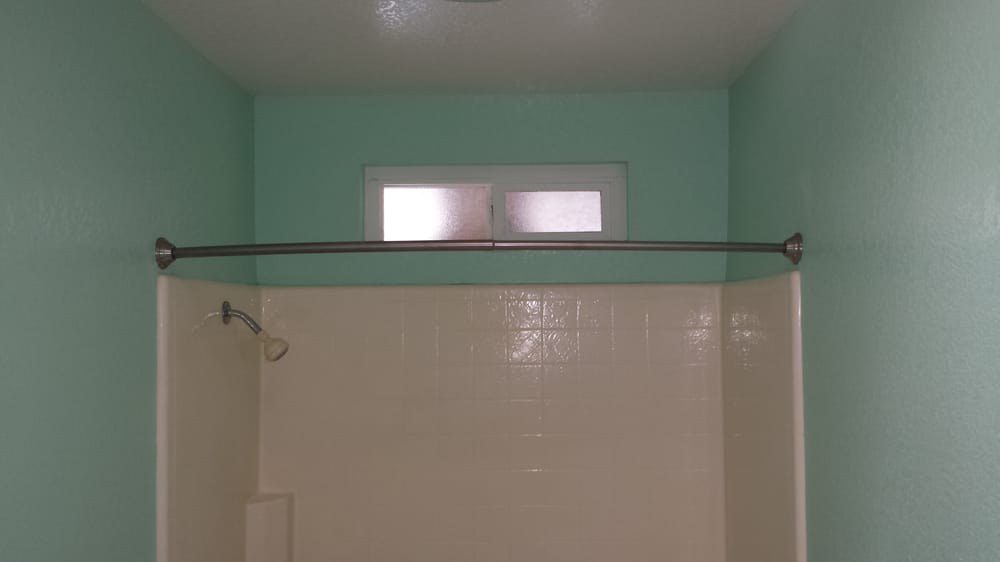
Bathroom walls painted to live with a hot shower every morning
A bathroom is the smallest room we paint and often the toughest one. Steam rolls up the walls every day, the ceiling over the tub stays damp, and nearly every stretch of wall runs into tile, a mirror or a fixture. On Lake Elsinore jobs we wash, prime and choose a sheen made for wet rooms before any color goes up. See rooms we have finished in the gallery, or set up a walk-through for a ballpark.
☎ (951) 685-1595Where bathroom paint gives up first
Look up before you look at the walls. The first paint to blister or peel in most bathrooms sits on the ceiling right above the shower and on the wall just over the tile line, because that is where hot steam meets a cooler surface and turns back into water. Paint that stays wet every morning softens, loses its grip and eventually lets go in curls.
The exhaust fan decides a lot of this. A fan that is undersized, clogged with dust, or switched off the moment the water stops leaves the moisture hanging in the room. We look at the fan on the walk-through and tell you honestly when the paint is going to be fighting it.
Small room, plenty of brush work
A bathroom has more edges per square foot than any room in the house: tile, vanity backsplash, mirror, light bar, door casing, towel bars. Most of the time goes into cutting those lines by hand. On textured walls like an orange-peel finish, the brush has to push paint into every bump, or the low spots show through as pinholes.
Damp lake air, and what it adds to a steamy room
Lake Elsinore has a moisture story most inland towns do not. Homes near the water deal with damp air on top of the steam every bathroom makes, and the older lakefront houses are the ones that tend to peel on their damp sides unless they were primed properly. A bathroom on the lake side of a house can stay humid long after the shower is off, because the air drifting in through the window is wet too.
That is why we pick primers by exposure. A bathroom on the hill side of a house up in Tuscany Hills or Canyon Hills dries out differently from one a few blocks off the shore, and the primer under your color should suit the room it is going into.
None of that helps if the paint itself has been thinned. John started this company after watching an employer put on half the paint the job called for, and a bathroom punishes that habit faster than any other room. A thin film lets moisture straight through to the wall. Every coat goes on at the spread rate the manufacturer prints, so the film is thick enough to keep steam at the surface.
Wash, block the stains, then the color
Kill the mildew
Gray or black specks along the ceiling and the caulk line are mildew, and paint over live mildew grows right back through. We wash those areas with a mildew cleaner, rinse, and let the room dry out with the fan running.
Scrape and patch
Loose and peeling paint comes off down to a firm edge. Soft drywall around the tub gets cut back and repaired, then holes and dings are filled, sanded and spot textured so each patch disappears into the wall around it.
Prime with a stain blocker
Water stains, old mildew shadows and bare patches get a stain-blocking primer before any color. Skip that step and a brown ring from an old leak can bleed back through fresh coats.
Recaulk where paint meets tile
Cracked or moldy caulk at the tub, the vanity and the trim comes out and gets replaced with a paintable, mildew-resistant caulk. A clean bead there is what makes the paint line look sharp.
Full coats of a wet-room finish
Color goes on in full coats of a moisture-rated paint, brushed at the edges and rolled on the open wall, with the room kept ventilated while the finish sets up.
The right sheen for a room that gets wet
Flat paint looks soft and hides wall flaws, which is why it shows up in bedrooms. In a bathroom it is a poor bet: its open, chalky surface soaks up moisture and holds onto grime, and scrubbing it leaves shiny burnished spots.
Satin for most bathroom walls
A moisture-rated satin wipes clean, sheds steam better than flat, and keeps a low sheen that does not make every bump in a textured wall glare under the vanity light.
Semi-gloss for trim, doors and the wettest wall
Door casings, baseboards and the wall right beside the tub take semi-gloss. It is the hardest wearing of the common sheens and wipes down after every splash.
Color in a small, steamy room
Light colors, like the soft mint at the top of this page, keep a bathroom with one small window from feeling boxed in, and they hide dried water spots better than very dark walls do. Deep colors can work as well, but they need more coats to cover evenly and they show every wipe mark, so we talk that through with you before the color is ordered.
Ceilings
Plenty of bathroom ceilings get a flat ceiling paint out of habit. Over a shower, a moisture-rated ceiling finish or a satin holds up far better, so we price both and let you choose.
Bathrooms are often the first room on a longer list
People who call about a bathroom often have the hall outside it on the same list, since those walls take the scuffs of everyone heading to the shower. Our hallway painting page for Lake Elsinore covers that work, and bedroom painting covers the rooms next door, including deep colors that take extra care. Outside, we handle garage floor painting and shed painting on the same streets.
For the service across all our towns, see the main bathroom painting page, and for everything we take on in town, the Lake Elsinore page. One bathroom is a perfectly good job on its own, and it gets the same prep we would give a whole house.
What Lake Elsinore homeowners ask about bathroom paint
Why does the paint keep peeling above my shower?
Steam condenses on the coolest surface it finds, usually the ceiling over the tub and the wall just above the tile. Paint that stays wet day after day softens and loses its bond. A weak or unused exhaust fan, thin paint and skipped primer all speed it along.
Is semi-gloss always the best choice for a bathroom?
Not always. Semi-gloss is the toughest common sheen and suits trim, doors and the wall beside the tub, but on a big textured wall it can highlight every bump. A moisture-rated satin is usually the better look for open walls and still wipes clean.
Can you paint over the mildew on my ceiling?
Not directly. Mildew painted over keeps growing and shows through again. We wash it with a mildew cleaner, rinse, let the surface dry, and seal any leftover staining with a stain-blocking primer. If the mildew keeps returning quickly, the fan usually needs attention too.
Do you redo the caulk around the tub?
Yes, when it is cracked, gapped or stained. Old caulk comes out, the joint is cleaned and dried, and a paintable mildew-resistant bead goes in before the walls are painted. That line where wall meets tile is the first thing people notice in a small room.
How long will the bathroom be out of use?
Less time than most people fear. A single bathroom usually goes quickly, and we plan around a second bathroom if you have one. The water-based paints we use dry fast and smell mild, but the shower should stay off until the finish has set up.
Will you match the texture on my bathroom walls?
Yes. Patches get spot textured to blend with the wall around them, whether that wall has orange peel, knockdown or a smoother finish. Where a repair would still show, we retexture the whole wall so it reads as one surface once the color is on.
Walk the bathroom with us before anyone picks a color
Show us where the paint is failing, switch on the fan so we can hear it, and point out any stains you have been painting around. We look over the ceiling, the caulk and the walls, talk through sheen and primer, and give you a number before we leave. You can also call (951) 685-1595 and talk it through first.
Set up a bathroom walk-through